



- SLAVERY
- African Holocaust
- Slavery in America
- Arab Slave Trade
- Jewish Slave Trade
- Slavery Revolts
- Modern Slavery
- Mental Slavery
- CULTURE
- Culture Complex
- Rites of Passage
- Kwanzaa
- African Agency
- Language & Africa
- Music and Dance
- IDENTITY
- African Race
- Consciousness
- Educating a Child
- ANCIENT AFRICA
- African KingdomsPtahhotep of Egypt
- PAN-AFRICA
- Business & Africans
- African Cinema
- War and Religion
- Art of Revolution
- Garvey Economics
- African Leaders



 |
 |


- African Kings and Queens
- African Marriage
- Consciousness
- Made In Africa
- White Supremacy
- Business & Africans
- ICC & Africa
- African Fundamentalism
- Capitalism or Socialism
- Facts About Africa
- War and Religion
- Death of African Languages
- Garvey Economics
- Cabral Theory
- NGO and Development
- Garvey Legacy
- Willie Lynch Hoax
- Malcolm OAAU
- Ethics of the Reparations
- Afrocentrism Pseudohistory?
- Marley Film Review
- Abolition and Wilberforce
- Black Panther Critique
- Jews and Slavery
- Gay Rights
- Failure Of African Leadership
- Facts About Africa
- Female Genital Mutilation
- Failure to Engage
- Libya Invasion
- Dubois: Souls of Black folk
- Slavery in America
- Amilcar Cabral
- Agency and Africa
- Mis-Education of the Child
- African Revolt
- The Flag of African Cinema
- The Politics of Liberation
- White Supremacy
- The Horrors of 500 Years
- Africa and the Rise of Islam
- Why Kwanzaa
- Seen But Never Heard
- African Classical Music
- South Africa: 10 Years On
- Music and Dance in Religion
- White Abolition of Slavery
- A Threat to Black Studies
- Art of Revolution
- African Influence in Barbados
- Origins of Voodoo
- Black Out White Wash
- Ethiopian Slave Trade
- Darfur Report
Until lions tell their tale, the story of the hunt will always glorify the hunter
– African Proverb
Power concedes nothing without a demand. It never did and it never will
– Frederick Douglass
The most pathetic thing is for a slave who doesn't know that he is a slave
– Malcolm X
Every man is rich in excuses to safeguard his prejudices, his instincts, and his opinions.
– Ancient Egypt
Until the Story of the hunt is told by the Lion, the tale of the hunt will always glorify the hunter.
– African Proverb
What kind of world do we live in when the views of the oppressed are expressed at the convenience of their oppressors?
– Owen 'Alik Shahadah
We are not Africans because we are born in Africa, we are Africans because Africa is born in us.
– Chester Higgins Jr.
Leave no brother or sister behind the enemy line of poverty.
– Harriet Tubman

If the future doesn't come toward you, you have to go fetch it
– Zulu Proverb
If we do not stop oppression when it is a seed, it will be very hard to stop when it is a tree.
– ' Alik Shahadah
If we stand tall it is because we stand on the shoulders of many ancestors.
– African Proverb
Injustice anywhere is a threat to justice everywhere.
– Martin L. King, Jr
The greatest threat to freedom is the absence of criticism
– Wole Soyinka
No longer must the African genius be trapped between bureaucracy and mismanagement
– Alik Shahadah
How can I turn from Africa and live?
– Derek Walcott
For far too long, a majority of Africans have been indifferent to misrepresentations about who they are
– Childo Nwangwu
We cannot have the oppressors telling the oppressed how to rid themselves of the oppressor
– Kwame Ture
|
|||||||||||||||||||||||||||||||||||||||||||||||||||||||||||||||||||||||||||||||||||||||||||||||||||||||||||||||||||||||||||||||||||||||||||||||||||||||||||||||||||||||||||||||||||||||||||||||||||||||||||||||||||||||||||||||||||||||||||||||||||||||||||||||||||||||||||||||||||||||||||||||||||||||||||||||||||||||||||||||||||||||||||||||||||||||||||||||||||||||||||||||||||||||||||||||||||||||||||||||||||||||||||||||||||||||||||||||||||||||||||||
AFRICA WAS FIRST Europeans have been firm in holding up themselves as creators of civilization: That only when people left Africa did civilization come into existence. This is done by doing exactly what the Romans did before, by defining civilization to include their traits, habits, and defining everyone else's on the outside. Hence despite all the sophistication of some "barbarian" tribes, they were still barbaric in Romes eyes. Civilization defined by the conquer is suspect. But now, recent to archeology, is Affad 23. Affad 23, is an African archaeological site located in alluvial deposits formed by an ancient channel of the Nile in the Affad District of Southern Dongola in northern Sudan. Archaeologists from the 'Institute of Archaeology and Ethnology' in Poznań, unearthed the remains of a settlement provisionally estimated to be 70,000 years old. [ref] Claiming the Past From one point of view South Africans cannot boast about building Axum, KMT, or Timbuktu, because they, as a group, played no role in it. It is a valid argument but we have to consider other things also. It is human nature to take claim of the achievements of the past. All Africans lay claim to KMT, Axum, Timbuktu, Great Zimbabwe, etc, as part of our racial contribution to the world. It actually does not matter if anyone in the Diaspora or South Africa has direct Ethiopian or Egyptian blood, because what the claim is saying, is that people of African ancestry, or people who "look like us," have within them the capability to produce great works. Because if it was about direct claim, then no one can claim anything. With Greece there is no direct connection to British Empire -- yet it is all still culturally/academically the history of Eurasia. All of Europe talks about a connected European history. There are homages to this pan-European history all over Europe. It is embedded in the education system. But does Newton represent the average Brit? Certainly not, then why would they stretch and claim Aristotle as part of European genius? if we cannot stretch and claim Imhotep? At one level of argument on Only Einstein should claim E=Mc2. The few great innovators of history are never the majority of the people, yet the majority of the Romans claim the work of the few genius Romans, the accomplishments of a few Aksum ites become the claim of all Ethiopians. Because the people of modern Ethiopia has changed since then, so if we want to put a fine point on it the Oromo people cannot lay claim to Lalibella. And then were do we draw the line? And there is a line, but it is blurred. It is possible to argue that all Muslim accomplishments can be claimed by Muslims because of the ideological connection, just like the recent accomplishments of Japan may be claimed by modern Japanese. In other words we are finding some sphere of commonality (political, ideological, social, etc) to show that those things allow them to make a connection. Jews do this all the time when they say Jewish inventors, or Jewish noble Peace Prize winners. And all connections are valid at some level. This is the way human beings forge their identities on the great works of the past, to inspire them to build anew.
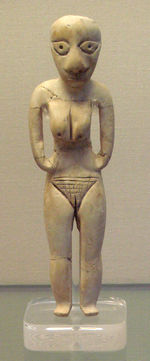
Worthebuch der Aegyptishen Sprache. Band V, p. 216. The Ancients referred to Africa south of their country by names such as Ta-Kenset, literally „placenta-land‟, Khenti = „ land of beginnings‟ and Ta-iakhu = „the land of the spirits‟, that is, “where the souls of ancestors dwell ( “Nile Genesis: Continuity of Culture from the Great Lakes to the Delta” in Ivan Van Sertima). PRE-EGYPT The Badarian culture provides the earliest direct evidence of agriculture in Upper Egypt during the Predynastic Era. It flourished between 4400 and 4000 BCE,[2] and might have already existed as far back as 5000 BCE.[3] It was first identified in El-Badari, Asyut.
The "social "construction of race in America does not rely on skin color. "African Americans," as Asante notes, " constitute the most heterogeneous group in the United States biologically, but perhaps one of the most homogeneous socially." The issue is color is used against African interest, for example:
RACE IN ANTIQUITY
Note: Recent DNA testing of the Amarna mummies (King Tutankhamun and his relatives) indicates that they inherited their genetic material overwhelmingly from African populations in the Great Lakes of East Africa, tropical West Africa and Southern Africa. These regional matches do not necessarily indicate an exclusively African ancestry for the Amarna pharaonic family. [ref]
The pyramid text and Solar Calender were born by the Nile river as it drew the people to it and nurished them. The lenghth and breath of its banks resembled any metropolitan skyline with its bustling streets and markets, grave yards, government buildings and temples of worship which served a population of some 5 million inhabitants! What was to be described as the First Golden Age began in the third dynasty 5345-5043 BCE. The prodigious Pharoah Zoser commissioned the famous architect and prime minister - Imhotep - to build him a most magnificent tomb to rival all others. Rising to the challlenge Imhotep erected the step pyramid at Sakarah that stands until this day. Unique in its construction and the model for others to follow, the step pyramid was designed to resemble a celestial stairway leading to the heavens! By the dawning of the 3rd Dynasty the world famous great pyramids were constructed under the wistful gaze of Pharohs Khufu, Khafa and Menkaura. These monuments preceded and long out lasted other so-called wonders of the ancient world. Over the next 11 dynasties Pharoes rose and fell like the ebbing tide of the ocean. The close of the Old Period of Empire was signaled by the invasion of Saltis, whose subsequent defeat ushered in the new Golden Age. This time of glory witnesses the building of the Karnak Temple complex, the Abu Simbel temple in Nubia (Kush) and sea voyages of almost mythical grandeur and endeavour to the lands that would one day be called the Americas! The twilight of the Egyptian epoch was briefly held in check by the Kushite Pharaoh, Shabaka, who re-invigorated much of the governance of the old kingdoms but by 663 BCE the Assyrians had invaded and over ran the last ruler of Egypt - Priestess Shepenowpet. Following a dramatic succession of Persia and the domination by Alexander the Great, history saw the end of the phenomena that was Egypt! The awe-inspiring achievements of the Egyptians have given rise to a plethora of theories in an attempt to claim these wonders in the name of any one or thing - but the Africans who put forth these splendours. Not least of these theories range from the idea that people from the Middle-East, Asians and Europeans migrated south and settled among the natives, bringing enlightenment and governance but leaving the poor backward natives to grapple with technologies and precepts beyond their impoverished tribal minds! To the far-fetched notion that visitors from beyond the stars or dwellers from inter-dimensional stargates erected the pyramids and then fled! Such arguments, particularly the latter, are hardly worthy of a response but doubts must be addressed and the voice of reason must prevail. Although in the nineteenth century Sir Richard Burton referred to modern Egyptians as "whitewashed niggers," and Sir Flinders Petrie referred to their ancient ancestors as being of "course mulatto stock," neither of these formulations serve to give an agreeable pedigree to the precursors of Western civilization. One writer that deal with race is Lefkowitz (a textbook anti-African orientalist White Supremist) go to considerable lengths to prove that "Blacks," however defined, are not part of the story. Indeed, it was for this reason that Giuseppe Sergi, an Italian anthropologist overcame the problem in the 1880s by divining that the ancient Egyptians were dark — sometimes very dark — Caucasians. He labeled his group Hamites and placed them at the intersection of Africa and Asia. Later anthropologists theorized a Hamitic or series of Hamitic languages. By the 1920s the American anthropologist, C. G. Seligman, wrote that any signs of "civilization" in Africa were the products of the penetration of these incomparable bearers of culture. A few years later, Alfred Rosenberg, chief Nazi Party ideologue, could confidently claim Egypt's ruling class for Europe's peoples - and their Aryan branch at that. By the 1960s, however, the "Hamitic Hypothesis" had fallen from grace as the established orthodoxy. The linguist Joseph Greenberg demonstrated that the "Hamitic" languages were a chimera; no such unified group could be found. The people called "Hamites" were found to belong to differing language families. As the linguistic foundations for the hypothesis fell away, so too did the idea of a conquering "Hamitic Race." W. E. B. Du Bois was right when he said: "We cannot if we are sane, divide the world into whites, yellows, and Blacks, and then call Blacks white." He might have said that it would be equally as strange to call them "Mediterranean," "Hamitic," or a hundred other euphemisms. "Black" in the North American context. The "social "construction of race in America does not rely on skin color. "African Americans," as Asante notes, " constitute the most heterogeneous group in the United States biologically, but perhaps one of the most homogeneous socially.
1974 at the historic Cairo Symposium the highly renown and distinguished scholar Cheikh Anta Diop, and 20 other experts, silenced once and for all any challengers to the fact that the Egyptians were any thing other than natural Africans.
GREECE STUDIED FROM KEMET
RETURNThe Kingdom of AksumSee Kebra Negast By 350, Aksum conquered the Kingdom of Kush. At its height, Aksum controlled northern Ethiopia, Eritrea, northern Sudan, southern Egypt, Djibouti, Western Yemen, and southern Saudi Arabia, totalling 1.25 million square kilometers. The Aksum or Aksum empire was the 3rd largest African empire at 1.25 million sq km. In the sixth century, the kingdom of Aksum (Axum ) was doing what many elsewhere had been doing: pursuing trade and empire. Despite the disintegration of the Roman Empire in the 400s and the decline in world trade, Aksum's trade increased during that century. Its exports of ivory, glass crystal, brass and copper items, and perhaps slaves, among other things, had brought prosperity to the kingdom. Some people had become wealthy and cosmopolitan. Aksum's port city on the Red Sea, Adulis , bustled with activity. Its agriculture and cattle breeding flourished, and Aksum extended its rule to Nubia , across the Red Sea to Yemen , and it had extended its rule to the northern Ethiopian Highlands and along the coast to Cape Guardafui .
West Africa
In West Africa, trade was giving rise to towns. There, on the fringes of the Sahara, arose a kingdom and empire that its rulers called Wagadu. The people of this kingdom were the Soninke - African people who spoke the language of Mande. Their king was called Ghana, and Ghana became the name by which this kingdom and empire became known - ancient Ghana rather than the modern state also called Ghana.
Dʿmt ( Ge'ez: ዳሞት, Dmt) was a kingdom located in southern Eritrea and northern Ethiopia that existed during the 10th to 5th centuries BC. Few Proto-Ge'ez inscriptions by or about this kingdom survive and very little archaeological work has taken place. As a result, it is not known whether Dʿmt ended as a civilization before Aksum's early stages, evolved into the Aksumite state, or was one of the smaller states united in the Aksumite kingdom possibly around the beginning of the 1st century. The most recent research, however, shows that Ge'ez, the ancient Semitic language spoken in Eritrea and northern Ethiopia in ancient times, is not derived from Sabaean. There is evidence of a Semitic-speaking presence in Eritrea and northern Ethiopia at least as early as 2000 BC.(Nadia Durrani, 2005). It is now believed that Sabaean influence was minor, limited to a few localities, and disappeared after a few decades or a century, perhaps representing a trading or military colony in some sort of symbiosis or military alliance with the civilization of Dʿmt or some other proto-Aksumite state. The African Kingdoms of Nubia
Both groups were ethnic groups of indigenous African origin. The ethnic differences were no more significant than Ethiopians verses Kenyans.
The oversimplified concept of race ("black" and "white") is challenged along the Nile Valley, for nowhere is there a clear transition from one to the other. In America some people use these terms passionately to identify their own cultural or ethnic allegiances within our own society.
In fact, the Egyptians are certainly Africans, but they are neither "white" in the European sense nor "black" in the Congo-African sense. It can be argued that they were like the modern Ethiopians or Somali people with straight to curly hair and narrow bone structure. So from a modern racial context they would sit in the African world just as Ethiopians, Sudanese, Fulani and Somalis do today. The Egyptians really possessed a wide range of skin color and many differing physical characteristics, as did the ancient Nubians. But as time progressed an Egypt mixed more with outsiders with the final influx of modern Arabs the racial texture of Egypt became more complex with a higher percentage of “white skinned Arabs.” (As seen in lower Egypt today (North Egypt).
Below are excerpts from various historical and archeological sources that describe the progression of the Nubians from the initial organization of the settlers to the end of Christian domination around 1400AD. The reader is encouraged to follow the embedded links to find more information.
In the darkness of mans waking moments on earth a mallet strikes an anvil and for the briefest of moments and while the universe holds its breath - the darkness is dispelled. The power of God ignites the plains of the Earth with brilliant civilisations. The first of such events manifested in the regions of modern day Egypt and was known as Ta-Seti, thus called 'The Land of the Bow' for its renown archers.
The idea of a pharaoh (king) may have come down the Nile from Nubia to Egypt (and) that would make Nubian civilization the ancestor of Egypt... These wonderful discoveries were made by archaeologists labouring tirelessly with spades, chisels and shovels, who have revealed the illustrious days of Ta-Seti - stradling the regions of northern Sudan and southern Egypt. Also known as Ethiopia and Kush, its hidden secrets were laid bare by Professor Bruce William's in 1962. It took a colossal 20 years to gather the results of his teams extensive excavation. Astonishingly, writing was found in abundance adorning exquisite pottery establishing the universal literacy for all who lived in this forgotten but pivotal realm. This hieroglyphic textual evidence constitutes the oldest known form of writing yet discovered!
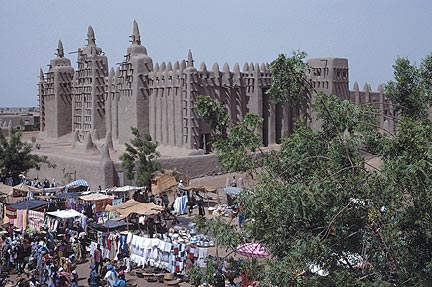
In west Africa, in what is modern day Mali and southern Mauritania, a golden age was coming into fruition. Ancient Ghana ranks as one of the most note worthy of African Kingdoms, as Dr Basil Davidson as stated; Important archaeological discoveries late in the 1970's have revealed a more complex and much earlier development, well before Ancient Ghana of 300 AD, of early state-like communities and even early cities. Surveys and excavations in this 'Middle Niger' region completed in 1984 at no fewer than forty-three sites of ancient settlement, proved that they belonged to an Iron Age culture developing there since about 250 BC, that the settlements grew into urban centres of natural size and duration'. The city Dr Davidson alludes to is the city of old Djenne and its neighbouring lands. Large stone masonry villages have also been discovered dating as far back as 1100 BC. Their archaeological finds include roads and walls of 2 metres high very likely erect in defence of the village. Taking the title 'Ghana' meaning King, figures through out history expanded upon these beginnings and the Ghanaian Empire began in earnest in 300 AD. At its heart was Kumbi-Salah which acted as a hive of extensive trade and attracted caravans from a variety of regions. Famed for its gold from the Wangara region, commented upon by the Arab writer Ibn Fazari who called Ghana the land of gold, compered it in size to its northern contemporary Morocco, while salt came to the city from the Sahara. Due to their expertise with iron and other metals, ancient Ghana traded in some of the finest artefacts in the area. Along side cotton, it was also known for its leather work called 'Moroccan Leather' despite the fact that it indeed originated in Ghana. Ibn Khaldun the well known Arab historian of the 14th century had this to say concerning the Ghanaian empire. At the time of the conquest of Northern Africa by the Arabs (between the periods 639 and 708 CE), some merchants penetrated into the western regions of the blacks and found among them no king more powerful than the King of Ghana. His states extended westwards to the shores of the Atlantic Ocean. Ghana (Kumbi-Salah) the capital of this strong, populated cities of the world... More wonders came from these African lands as attested too by another Arab geographer Ibn Haukal who commented in amazement on the lucrative trade that flourished in the region. His comments made in 951 CE mentions a cheque produced for the sum of 42,900 golden dinars written for a merchant in the state of Audoghast from a partner in Sidjilmassa in the north! Tales abound of one particular gold nugget weighing 30 pounds! This was truly a land of astonishing wonders and lavished wealth. A far cry from the misconception of the African languishing in barbarity and ignorance! Ibn Khaldun again makes mention of the lifestyle of the ancient Ghanaians while quoting from a book written in 1067 by Abu Ubaid Al-Bakri. He describes the Muslim quarter which had sprung up to facilitate the trans-Saharan trade with north Africa, containing 12 mosques, buildings of stone and acacia wood, schools and centres of education. It was described further as 'the resort of the learned, of the rich and pious of all nations'. In 990 CE Audoghast to the north was captured and included into the sprawling Ghanaian Empire. It was a fine addition and boasted a dense population including many from as far away as Spain. Its streets were lined with elegant houses, public buildings and mosques. The surroundings were rich in pastoral lands including sheep and cattle, making meat plentiful. Wheat was found in the market places in abundance imported from the north, honey from the south and a variety of foodstuffs from other regions. Robes of blue and red from Morocco was a popular fashion at the time. All which exchanged hands with payments of gold dust, cowrie shells or salt. When he gives and audience to his people he sits in a pavilion around which stand his horses caparisoned in cloth and gold; behind him stand 10 pages holding shields and gold-mounted swords and on his right hand are the sons of the princes of his empire, splendidly clad and with gold plaited into their hair. The governor of the city is seated on the ground in front of the King, and all around him are his ministers in the same position. The gate of the chamber is guarded by dogs of an excellent breed, who never leave the kings seat, they wear collars of gold and silver.' However, according to popular legend, in 1079 the land was invaded from the north by Almoravids pouring out of the newly founded Moroccan city of Marrakesh. A mass exodus ensued by the people of Ghana who fled southwards to escape the conflict. New research conclusively proves the Almoravid destruction Ghana never happened, it was a legend (boast) of the Almoravids which crept into history [Masonen, Pekka; Fisher, Humphrey J.] By 1087 the Soninkes were some how in control of the empire, and by this time most Ancient Ghanians were Muslim, but the empire disintegrated into several smaller states. Leadership was again assumed by native Ghanaian leaders but the days of glory were gone and the empire soon broke up. Wagadou Empire ("Land of Herds". existed c. 750-1200) The Kingdom of Ghana is generally given the dates 9th to the 13th century CE by historians. It marks the beginning of a series of empires in West Africa that were involved in extensive commercial trade. The introduction of the camel, which preceded Muslims and Islam by several centuries, brought about a gradual revolution in trade, and for the first time, the extensive gold, ivory, and salt resources of the region could be sent north and east to population centers in North Africa, the West Asia (Middle East) and Europe in exchange for manufactured goods. This all proves trade in this region was ancient. You should note by looking at the map above that the area of the Kingdom of Ghana during this time period is farther north than the present day country of Ghana, which Kwame Nkrumah names after Ancient Ghana. Some have called the Kingdom of Ghana the "land of gold, " an excellent description since it was abounding in gold. The gold trade was largely responsible for the development of Ghana into a powerful, centralized kingdom. The peoples of West Africa had independently developed their own gold mining techniques and began trading with people of other regions of Africa and later Europe as well. At the time of the Kingdom of Ghana, gold was traded for salt that came down from the Sahara desert. Rulers of Awkar
Soninke Rulers "Ghanas" of Wagadou Empire
Almoravid Occupation
Ghanas of Wagadou Kingdom
Rulers during Kaniaga Occupation
Ghanas of Wagadou Tributary
Two important sources that have told historians about the history of the Kingdom of Ghana are the writings of a Spanish Muslim named Al-Bakri and archaeological finds. Archaeologists have worked at excavating a site that many believe to be one of the king's cities of the Kingdom of Ghana, Kumbi Saleh.
Kanem was originally a confederation of African groups, but by 1100, a group of called the Kanuri settle in Kanem and in the thirteenth century the Kanuri began to conquer the surrounding areas. They were led by one of the great figures of African history, Mai Dunama Dibbalemi (1221-1259), who was the first of the Kanuri to convert to Islam. Dibbalemi declared jihad, or "holy war," against surrounding chieftaincies and so precipitated one of the most dynamic periods of conquest in Africa. At the height of their empire, the Kanuri controlled territory from Libya to Lake Chad to Hausaland. These were strategic areas: all the commercial traffic through north Africa had to pass through Kanuri territory. As a result of the military and commercial growth of Kanem, the Kanuri slowly changed from a nomadic to a sedentary people. In the late 1300's, civil strife within Kanuri territory began to seriously weaken the empire so that by the early 1400's, Kanuri power shifted from Kanem to Bornu, a Kanuri kingdom south and west of Lake Chad. When Songhay fell, this new Kanuri empire of Bornu grew very rapidly. The Kanuri grew powerful enough to unite the kingdom of Bornu with Kanem during the reign of Idris Alawma (1575-1610). Idris Alawma was a fervent Muslim and set about building a Muslim state all the way west into Hausaland in northern Nigeria. This state would last for another two hundred years, but in 1846, it finally succumbed to the growing power of the Hausa states.
Under King Soumaoro Kanté, the Sosso briefly conquered the Mandinka kingdoms of what is now Mali. These gains were lost at the Battle of Kirina (c. 1240) when Mandinka prince Sundiata Keita led a coalition of smaller states to soundly defeat the Sosso, thus beginning the Mali Empire. Sundiata marched on to the city of Sosso itself and destroyed it, marking the kingdom's end.
The fourteenth-century traveler Ibn Battuta visited ancient Mali a few decades after Musa's death and was much impressed by the peace and lawfulness he found strictly enforced there. The Mali empire extended over an area larger than western Europe and consisted of numerous vassal kingdoms and provinces. Following Mansa Musa's death, Mali went into a long decline, shrinking to the size of its original territory by 1645. From the ashes of the Ghanaian Empire emerged a new empire of truly legendary proportions: The Empire of Mali! Sweeping out from the small state of Kangaba and led by Sundjata Keita, the Malians, also known as Mandinkas, captured the Ghanaian capital of Kumbi-Salah and its incredible wealth and trade routes. Islam had come to the kingdom of Mali in 1050 AD under their first Muslim monarch, king Baramandanah. History has it that one of his successors Musa Keita visited the holy places in Mecca four times such as his love for th efaith of Islam! The groups now unified under the victorious Sundjata, who was now poised to be sovereign over a kingdom that would become the famed Mali Empire. 'Having drawn his sword, Sundjata led the charge, shouting his war cry. The Sossos were surprised by his sudden attack. The lightening that flashs across the sky is slower, the thnderbolts less frightening and flood waters less surprising than Sundjata. In a trice Sundjata was in the middle of the Sossos like a lion in the sheepfold. The Sossos, trampled under the hooves of his fiery charger, cried out. When he turned to his right, the Soumaoro fell in their tens, and when he turned to his left his sword made heads fall as when some one shakes a tree of ripe fruit.' Sundjata Keita, although a mighty warrior was also a nation builder of vision. Establishing his capital at Niani he bid his soldiers to farm the land, literally turning swords into plough shares; soldiers in to farmers harvesting the land and raising poultry and cattle. Under the leadership of Sundjata and his successors, the Malians forged an empire three times the already impressive size of Ancient Ghana, and stretched west to the Atlantic Ocean, south into the deep forests, east beyond the Niger River, and north to the salt and copper mines of the Sahara. In fact Mali encompassed a size akin to western Europe combined and included Senegal, Gambia, Guinea and Mauritania. A truly vast area indeed. Ibn Battuta describes the Malians as such: After the passing of Sundjata in 1255, history records and bears witness to the incredible sense of discovery and adventure that these Africans held in their hearts. The Egyptian geographer Shihab ad-Din al-Umari published the Masalik ad Adsar fi Mamalik al Amsar in 1342. In this astonishing volume the author describes the daring sea voyages of Mansa Abu Bakr II who equipped 200 ships with men, food, water and gold to last for several years and cast them off into the great unknown regions of the Atlantic Ocean. Their instructions? To sail west until all supplies where exhausted or until they reached the extremities of the ocean! They never came back. This was the year 1311, Christopher Columbus was not to make his famous voyage to the Caribbean for another 181 years! And indeed it has been discovered that Malian place names, customs, forms of Islamic dress and language have been found in Brazil, Peru and the United States. And contrary to the experience of the European explorers who landed upon the shores of the new world, the Muslim Mangdinkas where revered for their knowledge and piety and freely intermingled with the indigenous tribes along the length and breath of the Native American world. Abu Bakr II had conferred the vastness of his power and legacy to Mansa Musa who was the grandson of Sundiata’s half brother and who's name which conjures up tales of grandeur and elegance and unsurpassed generosity and wealth. In 1324, like every Muslim who endeavours to perform the annual pilgrimage to Mecca and participate in the Hajj, a monarch of Emperor Mansa Musa's immense standing and prestige would do so in truly spectacular fashion! Mounted before a caravan of 72,000 fellow pilgrims, comprising of soliders and servants and 900 camels loaded with 24,000 pounds of gold, much of which was given away to the poor (more), this wondrous entourage must have been a truly awe-inspiring sight and is only likened to the caravans of the Queen of Sheba sent to Prophet Solomon in ancient times. Between his home land and the fabled city of Mecca, Emperor Mansa Musa's sojourn radically altered the economy of every state he passed through, such was the impact of his vast gold stores. Egypts own economy was devastated for 12 years after because of the breath taking amount of gold Mansa Musa brought into that country! Under Mansa Musa, diplomatic ties with Tunis and Egypt were established, and Muslim scholars and artisans where brought into the empire, while the legendary name of Mali appeared on maps in Europe. Ever a patron of the arts and sciences, Mansa Musa set about building institutions of learning and embarked upon building numerous universities, schools and mosques in Timbuktoo and Gao.They became important trading centers for all of West Africa as well as fabled centers of wealth, culture, and learning. It was in these cities that vast libraries were built and madrasas (Islamic universities) were endowed. They became meeting-places of the finest poets, scholars, and artists of Africa and the Middle East. Timbuktu, in particular, had become legendary in the European imagination, representing all the wealth of Africa. In the capital Niana the Mansa erected the famous Hall of Audience a grand structure which boasted some of the finest examples of architectural techniques of the time including cut stone, adornments of arabesques, windows framed in gold and silver, wooden floors framed in silver foil and surmounted by a dome. By way of establishing diplomatic ties with other African nations Emperor Mansa Musa sent hand picked gifts of friendship to the sultan of Morocco Abu Al-Hassan who in like manner send lavish presents but Emperor Mansa Musa died before they could reach his court. His successor Mansa Suleiman nonetheless received the gifts and established a tradition of similar exchanges for years to come. By the fifteenth century, and like Ghana before it, the empire of Mali fell victim to internal feuding, droughts and invasion. With visionaries like Mansa Musa gone rival states rose to defy Mali and one in particular ushered in a new golden age.
The Songhay empire was the largest empire in Africa at a peak of 1.4 million km. Now take a look back again at the map of Africa's empires and kingdoms. Click here to return to the map again. You will see that the Kingdom of Songhay encompassed part of the Kingdom of Mali, as well as land beyond to the east and north. The dates for the Kingdom of Songhay partly overlap those of Mali, although the information that follows will reveal at what point Songhay gained control over certain portions of the old Kingdom of Mali. The dates for the Kingdom of Songhay are between 1350 and 1600 CE. The capital was the city of Gao. Even after its collapse it continued as the Dendi Kingdom (1591–1901) which was finally destroyed by French European colonialism. EconomyEconomic trade existed throughout the Empire, due to the standing army stationed in the provinces. Central to the regional economy were tharby but independent gold fields. The Songhai economy was based on an occupational class system. The most common were metalworkers, fishermen, and carpenters. Lower caste participants consisted of mostly non-farm working immigrants, who at times were provided special privileges and held high positions in society. At the top were noblemen and direct descendants of the original Songhai people, followed by freemen and traders. The labor system as resembling modern day unions, with the Empire possessing craft guilds that consisted of various mechanics and artisans. Criminal JusticeCriminal justice in Songhai was based mainly, if not entirely, on Islamic principles, especially during the rule of Askia Muhammad. In addition to this was the local qadis, whose responsibility was to maintain order by following Sharia law. Results of a trial were announced by the "town crier" and punishment for most trivial crimes usually consisted of confiscation of merchandise or even imprisonment, since various prisons existed throughout the Empire. Qadis worked at the local level and were positioned in important trading towns, such as Timbuktu and Djenné. The Assara-munidios, or "enforcers" worked along the lines of a police commissioner whose sole duty was to execute sentencing. Jurists were mainly composed of those representing the academic community; professors were often noted as taking administrative positions within the Empire and many aspired to be qadis. Decline The Battle of Tondibi was the decisive confrontation in Morocco's 16th-century invasion of the Songhai Empire. Though vastly outnumbered, the Moroccan forces under Judar Pasha defeated the Songhai Askia Ishaq II, guaranteeing the Empire's downfall. Meanwhile, to the west, the Saadi Dynasty of Morocco was at the height of its power, having just annihilated a Portuguese army at the Battle of Ksar el Kebir. In search of new resources for his kingdom, Sultan Ahmad I al-Mansur Saadi turned his attention to the gold mines of the Songhai. Judar Pasha continued onto Gao and sacked the city, but finding little in the way of riches soon moved on to the richer trading centers of Timbuktu and Djenné. The looting of the three cities marked the end of the Songhai Empire as an effective force in the region. However, Morocco proved likewise unable to assert a firm control over the area, due to the difficulties of communication and resupply across the Saharan trade routes, and a decade of sporadic fighting began. Morocco withdrew its forces by the end of the 17th century, leaving the region to splinter into a group of smaller kingdoms.
A List of the Rulers of Songhay The Za Dynasty
The Sonni Dynasty
The Origin of the Kingdom of Songhay
SONGHAI TIMELINE 
Mali was in ruins A former tributary state of the empire since 1335, Songhai now took centre stage and a fire brand shot forth from its hand - lighting the heavens! By 1469 Timbuktoo and Mali's capital Niani was levelled and the conquerors was named Sonni Ali. From his capital at Gao, Sonni Ali tightened his grip on the former Malian territories. When Sonni Ali passed away, he was succeeded by his son Sonni Baru whom, like his father, declined to pronounce himself a believer in Islam. This gave Muhammad Toure, a former general for Sonni Ali, legitimate grounds to rebel. In 1493, Muhammad Toure created a professional army of slave soldiers and after defeating Sonni Baru, doned the mantle of Askia or king. This new Askia was a passionate and cultured defender of the Islamic faith and proved a highly skilled ruler, extending the empire's territories westward to Senegal, eastward to Air and north to the Taghaza mines of the Sahara. Askia Muhammad, may his memory be forever on our lips, was a ruler of rare fortitude and was cut from the same cloth that bore Mansa Musa and, like him, embarked upon a magnificent pilgrimage to Mecca in the year 1495. While not as elaborate as Mansa Musa's, Askia Muhammad's pilgrimage was nonetheless wondrously impressive. Travelling with 500 hundred horsemen, 1,000 foot soldiers and 30,000 pieces of gold, Askia Muhammad returned with the title 'Caliph of the Western Sudan'. Mohammad's ties with the wider Islamic world was greater than those of previous monarchs before him. He surrounded himself with scholars and the elite of pious teachers and jurists, who guided him on all aspects of governing the empire according to Islamic rites. His love for religion naturally included a deep love for learning and as an indication of the importance that Askia Muhammad and his people placed on knowledge and all its ancillary sciences, the famous traveler Leo Africanus, in his volume 'A History and Description of Africa' noted: 'In Timbuktoo there are numerous judges, doctors and clerics all receiving good salaries from the king. He pays great respect to men of learning. There is a big demand for books in manuscript, imported from North Africa. More profit is made from the book trade than from any other line of business'. When one considers that Songhai was famed for its vast economy of gold, the previous statement is truly extraordinary! In fact The University of Timbuktu was centred around three Mosques or Masjids: The Masjid of Jingaray Ber, the Masjid of Sankore and the Masjid of Sidi Yahya. At the University of Timbuktu attended by 25,000 people, the students not only sought sacred knowledge there but also sought to purified their souls through the tenants of Islam. These students were just, honest, God fearing, trustworthy and of honourable character. Graduate students were the personification of the teachings of the Qur’an and the example of the Prophet of Islam who himself emphasised the importance of knowledge and piety. The character of the individual nurtured by this educational system can be illustrated by one highly respected and learned scholar by the name of Professor Ahmed Abu Bakr who was spoken of in these glowing terms: He taught his pupils to love science, to follow its teachings, to devote their time to it and to associate with scholars. he lavishly lent his most precious books, rare copies and the volumes he most valued, and never asked for them again, no matter what was the subject they treated. Sometimes a student would present himself at his door and ask for a book and he would give it without even knowing who the young man was .' In 1538 Askia Muhammad died and was buried in a step pyramid in Gao but his vision survived in this successors. In particular was Askia Dawoud who came to power in 1548-82. A warriors of some note Dawoud was himself a scholar and lover of the faith. Much like his predecessors, Dawoud encouraged the building of mosques and the extension of the world famous Sankore Mosque, construction of libraries and centres of learning. This golden age continued, for in the 16th century, students in Timbutcoo with a population of 100,000 could enjoy spacious houses made from clay and wood with thatched roofs. Mosques made from baked clay were quite elaborate and stylish. Factories and shops abound, weavers of cotton and linen flourished in great numbers. The palace of the Askia saw the comings and goings of some of the most noble of courtesans as described again by Leo Africanus: ...habits of dress became sumptuous and it would seem that different functionaries had their different uniforms and insignia of office, to the wearing of which great value was attached. Their dress and appointments of women became also extravagantly luxurious. They were served in gold. In full dress their persons were covered with jewels and the wives of the rich when they went out were attended by well-dressed servants' The capital Gao was a reflection of its sister cities. Described was also noted by Leo Africanus as well poilced and inhabited by wealthy merchants who traded in gold and other goods. Food stuff such as melon, bread and meat where plentiful as were wells of fresh water. Jenne was a eight gated city, well protected by swamps it could only be approached by narrow canals and streams. Its most striking feature was the Grand Mosque. It facilitaed thousands of students and teachers versed a wide range of dicsiplines and expertise including medicine and surgery. In 1591 disaster loomed on the northern horizons when an invasion from Morocco, prompted and aided by the queen of England, launched an attack with cannonball and fire upon the ancient city. The ruler at the time Askia Ishak II could do nothing as the Moroccans destroyed Songhai and confiscated many books which represented hundreds of years of erudition. It is highly unlikely that many volumes where destroyed, but are thought to adorn the libraries of rare collections the world over. Songhai was rightfully described as a Golden Age. Unequalled in its erudition, it respresneted the very pinnacle of African achievment and excellence. An excellence which flowed from the hand of God! But this is not the end of the achievements of the diverse and gifted African people. Across the plains and valleys, over the deserts and oasis are of our memory are civilisations who have cleft their marks in the sand and upon our consciousness. In the days of mans brief moments on earth Gods mighty mallet pounds again and again upon the anvil of our hearts. And for the briefest of moments, and while the universe waits - the darkness is dispelled! ORIGINSThe exact origins of the Kingdom of Songhay are not clear to historians, although there are records of the King Kossoi accepting Islam around 1009 CE. This began an integration of commerce and religion to gain and maintain power that would continue throughout the history of the Kingdom of Songhay. Islam became a unifying force for the people and an important factor for maintaining state power. The first of two great rulers in the Kingdom of Songhay was Sonni Ali. He came to power in 1464 CE and made the Songhay perhaps the most powerful state in western/central Africa at the time. He seized Timbuktu and Djenne, which had been parts of the Kingdom of Mali. These, as well as the capital city of Gao, continued to be important centers of learning and commerce. Sonni Ali was not a devout Muslim himself, but was sympathetic to indigenous religious practices. Most of all, he was concerned about his own ambitions to build a great empire.
His successor was Mohammed Askia, who came to power in 1493 CE. He expanded the kingdom even further and set up an even more advanced and strongly centralized government. He developed a new system of laws, expanded the military, and encouraged scholarship and learning. Unlike Sonni Ali, he was a devout Muslim, who used the combination of Islam and commerce to build his kingdom. He brought peace and stability to the kingdom during his reign.
The Songhai Rebellion and Mali's DeclineMali reached its peak in fame and fortune in the 1300s. Then weak and incompetent kings inherited power. Late in the 1300s the old problem of dynastic succession brought quarrels that weakened the Mali kingship and gave others opportunity. The others in this instance were the Songhai people, who lived along the middle of the Niger River and monopolized fishing and canoe transport there. Trade at Gao had brought Islam to the Songhai. Some Songhai royalty had converted to Islam, as had an high percentage of Songhai commoners. Mali control over the Songhai capital, Gao , had always been tentative, and the spirit of independence had not died among Songhai kings. A Songhai king led his people in rebellion. The rebellion disrupted Mali's trade on the Niger River. Mali's empire suffered as the Songhai sacked and occupied Timbuktu in 1433-34. In 1464 a Songhai king, Sonni 'Ali took power, and again Timbuktu was attacked, Sonni 'Ali capturing the city after a great loss of life. Five years later, Sonni 'Ali conquered the town of Jenne which had been thought impregnable. In his twenty-eight years of military campaigning, the victorious Songhai king won the title of King of Kings. He dominated trade routes and the great grain producing region of the Niger river delta. Sonni 'Ali's competitor, the Mali empire, was deteriorating, and the Mali empire was to die in the 1600s.
See Islam and Africa The region known as the Maghrib lies in North Africa, in what are now the countries of Morocco, Algeria, and Tunisia. Note on the map below where the Maghrib lies in relation to the three West African kingdoms we have discussed. (Click here if you need to go back and look at the map of Africa's Kingdoms and Empires again.) Think about what relationship might have existed between these two regions as you read through the text below. The Maghrib underwent significant changes beginning in the 7th century CE that led to a shift in its dominant religion to Islam. Before this time, the population consisted of a mix of Christians, Jews, and people practicing indigenous religions. Yet this began to change as Arabs gained more and more power in the region. The people living in the Maghrib at the time were called Berbers. Today their descendents still live in this region of Africa, and the majority of them follow Islam. During the period between the 7th century and 10th century CE (overlapping with the early days of the Kingdom of Ghana), Islam became accepted throughout this region. It remains the dominant religion there up to this day. How did this significant change occur? Historians have explained that the Arabs brought Islam to the Maghrib as they moved into the area. The Arabs were a powerful political and military force in the region. At first, there was pressure for Berbers to join the Arab military and adopt Islam for reasons of political/economic advantage. However by the 8th century, Berbers were ready to adopt Islam as well as Arabic culture. They converted to Islam on a massive scale, but also continued to resent Arab domination in this region. The Berbers developed their own unique expression of Islam in a doctrine called Kharidjism. This doctrine emphasized equality amongst Muslims and criticized the ruling authority of the Arabs. It became the Berber's ideology of struggle against Arab domination. Their resistance was aimed not at Muslim Arabs, but specifically targeted towards the ruling class. Beginning in the late 8th century CE, the Idrisid dynasty strengthened the presence of Islam in the region through measures to convert the remainder of the non-Islamic population to Islam. By the 10th century, virtually the whole region known as the Maghrib had become Islamic. During this time of the Arab conquest of the Maghrib in the 7th and 8th centuries, there was an influx of Muslim merchants who became involved in the trans-Saharan gold trade with the Great Kingdoms of West Africa that were just forming around this time. Africans who came across from Arabia and Africans Muslim who traded across the desert spread Islam across West Africa. The Fulani people are noted for this activity. Massina EmpireFrom Wikipedia, the free encyclopedia

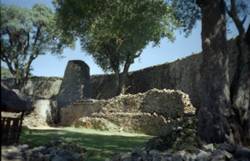
The Massina Empire (Var.: Maasina or Macina: also: Dina of Massina, Sise Jihad state, and Caliphate of Hamdullahi) was an early nineteenth-century Fulbe Jihad state centered in theMacina and Inner Niger Delta area of what is now the Mopti and Ségou Regions of Mali. Its capital was at Hamdullahi. The Fulas of the region had for centuries been the vassals of larger states, including the Mali Empire (13th-14th centuries), the Songhai Empire (15th century), the Moroccan pashas ofTomboctou (16th century), and the Bambara Empire at Ségou (17th century). Inspired by the recent Muslim uprisings of Usman dan Fodio in nearby Hausaland, preacher and social reformer Seku Amadu led a Fula army in jihad against the Bambara Empire in 1818. The empire expanded rapidly, taking Djenné in 1819 and establishing a new capital at Hamdullahi in 1820. At the height of the Empire's power, a 10,000 man army was stationed in the city, and Seku Amadu ordered the construction of six hundred madrasas to further the spread of Islam. Alcohol, tobacco, music and dancing were banned in accordance with Islamic law, while a social welfare system provided for widows and orphans. A strict interpretation of Islamic injunctions against ostentation led Amadu to order the Great Mosque of Djenné to be abandoned, and all future mosques were ordered built with low ceilings and without decoration orminarets. One of the most enduring accomplishments was a code regulating the use of the inland Niger delta region by Fula cattle herders and diverse farming communities. In 1825, Seku Amadu conquered Timbuktu. He died in 1845, leaving control of the Massina Empire to his son, Amadu Seku. Amadu Seku in turn soon abdicated the throne in favor of his son Amadu Amadu. In 1862, Toucouleur conqueror El Hadj Umar Tall launched an attack on the Massina from his newly-secured base at Ségou. After a series of bloody battles, he entered Hamdullahi on March 16, levelling it. Amadu Amadu was captured and put to death. Though resistance briefly continued under Amadu Amadu's brother Balobo, the destruction marked the effective end of the Massina Empire. Mossi empire created in the 15th century, are a people in central Burkina Faso, living mostly in the villages of the Volta River Basin. The Mossi (of Burkina Faso) were able to conquer a vast amounts of territory thanks to their mastering of the horse, and created a prosperous empire and kept peace in the region until the beginning of colonialism. The expansion of the Mossi empire was stopped in the 19th century with the initiation of intensive colonialism by the French. Before then, the Mossi people held a belief that "when the first white face appeared in the land the nation would die." Mutapa Empire: Great Zimbabwe Aerial view of Zimbabwe ruins Great Zimbabwe existed between approximately the 12th and 15th centuries CE, and it is the largest of about 150 ruins found in the land around the Zambezi and Limpopo Rivers. This area is filled with granite that was used as building material. Examine the map below to find the Zambezi and Limpopo Rivers. The yellow point between the two marks the location of Great Zimbabwe. Its kingdom, however, was much larger, stretching into much of present day Zimbabwe and central Mozambique. The greater area of the kingdom is also indicated on the map.
The ruins of Great Zimbabwe are remains of what was once a great trading civilization, which sprang up in the interior of southern Africa. Although the civilization had some contact with outside groups, modern historians have agreed that Great Zimbabwe was built and managed by Africans living in the interior. It was a center of gold and ivory trade. Towards the latter part of the history of Great Zimbabwe, evidence (pots from China etc) suggests that the people living there were trading with regions as far as China, Persia, and Syria.
Too many people living and farming one small area led to environmental degradation. Eventually the land was no longer able to sustain such a large number of people. Alliances between the Shona states after the decline of Great Zimbabwe created the Rozwi state which continued until 1834 when the Ndebele people (a splinter group of South African Zulu people) under the command of Mzilikazi invaded and assassinated the Rowzi leader. Later the son of Mzilikazi relocated the Ndebele capital to Bulawayo. The Mwenes or Monomatapas of the first Mutapa state:
The Mwenes or Monomatapas of the second Mutapa state:
DENIAL OF AFRICAN ORIGINS The official line in Rhodesia during the 1960s and 1970s was that the structures were built by anyone but African people. There was an official governmenr censorship against archaeologists who challenged this. According to Paul Sinclair:
Backcountry of the Congo ForestConstructing history in the Congo Forest between the 12th to 15th centuries CE is a challenge. Historians rely on archaeology, linguistics, oral histories, and later writing to learn about this time period because this is a region without written records. Look at the map below to see where the Congo Forest is located. Futa ToraTakrur was the name of the capital of the state, also known by the same name, which flourished on the lower Senegal River for a brief period from ca. A.D. 1000. Attribution, nisba—that is, a name derived from a tribe, a town, a sect, etc.—is well known in the Arab world; hence the word Takruri (plural Takarir 1) was coined to refer to the people of this kingdom. This form is still used by the Moors and Arabs of the northern bank of the Senegal; the Wolof use Tocolor from which the French Toucouleur is derived 2. In the Middle East, however, al-Takrur, i.e ahl al-takrur or the Takarir, came to have a generic sense inclusive of all peoples of West African origin. This paper is concerned with the origin, development and some aspects of this Middle Eastern use. The West African Kingdom of Futa Toro (aka Fuuta Tooro - formerly Tekrur) is the region on the Senegal River in what is now northern Senegal and southern Mauritania. Muslim IncursionsDuring Ghana's days of glory, Muslim tradesmen were coming south in caravans from places like Sijilmasa , Tunis and Tripoli . From Sijilmasa the caravans had been going through Taghaza to Awdaghost. From Tunis and Tripoli they had been going to Hausaland and the Lake Chad region. They had been bringing salt southward, and they also carried cloth, copper, steel, cowry shells, glass beads, dates and figs. And they brought slaves for sale.
The Muslims were offended to find people worshiping their king as a divinity rather than worshipping Allah. The Muslims complained of people believing their kings to be the source of life, sickness, health and death. The Muslim writer al-Bakre described a Ghana king as having an army of 200,000 men, 40,000 of whom were archers. And he described the presence in Ghana of small horses. Among the Soninke, the town of Kumbi had become a commercial center alongside a town of round mud-brick huts. Muslim tradesmen living there built stone houses and a number of mosques. Some Muslims there served as ministers at the king's palace, and the town of Kumbi became an intellectual center for western Africa. Muslim writers described one king of Ghana as renowned for his great wealth and the splendor of his court. The king held audience wearing fine fabrics and gold ornaments and bedecked his animals and retainers in gold. People in the north of Africa spoke of the king of Ghana as the richest monarch in the world. But the power of the kings of Ghana was destined to end. Muslims in western Africa united behind the Almoravids - a Muslim dynasty that ruled in Morocco and Spain in the 11th and 12th centuries. A religious movement among the Muslims known as the Sanhaja inspired the Almoravids and others to a jihad (holy war), and Muslim Berbers in the Sahara joined an effort toward conversions and war against Ghana. The leader of the Sanhaja movement and army in the Sahara area, Abu Bakr, captured Awdaghost in 1054. And in 1076, after many battles, he captured the city of Kumbi. Almoravid domination of Ghana lasted only a few years, but the Almoravids held onto control of the desert trade that had been dominated by Ghana. Without control of the gold trade, the power of Ghana's kings declined further. They had, meanwhile, converted to Islam - while holding onto the religious rituals and myths that justified their rule to their subjects. Ghana's kings allowed Berber herdsmen to move into Soninke homelands, and these herdsmen began overgrazing Ghana's lands. Ghana's agricultural land became worn and less able to support as many people as before. Subject kings and tribes broke away from Ghana's rule. The king of the Sosso people, in neighboring Kaniaga , turned the tables on Ghana, and in 1203 the Sosso overran Ghana's capital city, Kumbi.
The Mandingo EmpireAfter their victory over Ghana, the Sosso expanded against the Mandingo (or Mande) - a people who spoke Mande and lived on fertile farmland around Wangara . The Sosso king, Sumaguru Kante, put to death all of the sons of the Mandingo ruler but one, Sundjata, who appeared to be an insignificant cripple. But Sundjata rallied the Mandingo. A guerrilla army built by Sundjata overwhelmed the Sosso and in 1235 killed their king, Sumaguru Kante. Sundjata annexed Ghana in 1240, and he took control of the gold trade routes. Merchants moved out of Kumbi to another commercial city farther north: Walata . And in small groups the Soninke people began emigrating from what had been their homeland.
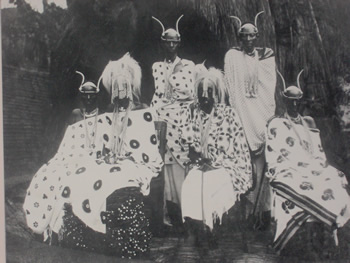
Benin Exports SlavesBenin was a city that dated back to the eleventh century - and no relation to the West African nation of Benin of the twentieth and twenty-first centuries. Benin was a large city for its time - a walled city several kilometers wide in a forested region inland from where the Niger River emptied into the Atlantic. In the mid-1400s the ruler of Benin, Ewuare, built up his military and began expanding. Captives taken in battle he traded to the Portuguese. Benin's empire reached about 190 miles (300 kilometers) in width by the early 1500s. Then it stopped expanding, and with this it had no more captives to sell as slaves, while selling slaves to the Portuguese was being taken up by others. South Central AfricaSome scholars theorize that Bantu speaking people had moved south from around the Benue River in western Africa into south-central Africa. By the 900s, the pastoral and Hamitic speaking Tutsi were migrating southward, into east-central Africa, to Rwanda , near Ukerewe , in centuries to come to be known as Lake Victoria. There, it is said, the Tutsi introduced cattle raising, iron-working, new crops, kingship and caste divisions. The people whom the Tutsi overran were Bantu speakers - the Hutu - and the Tutsi made vassals of some of the Hutu, giving them cattle in exchange for services and loyalty.
Eastern AfricaThose who remained in Nubia after conquests by the Soba and by the Aksumites lived for long periods in peace and cooperation with Egypt, including returning to Egypt runaway slaves. They traded with Egypt, and some genetic diffusion with the Egyptians occurred. Between the ninth and twelfth centuries, Nubia became more Arabic and more Muslim. And Africans from Nubia filled the ranks of Egypt's military.
Christianity and Islam in EthiopiaSince the 900s, people in and around the Ethiopian highlands had been benefiting from trade with port cities such as Adulis on the Red Sea, Zeila and Berbera on the Gulf of Aden, and Mogadishu , Merca and Brava on the shore of the Indian Ocean. These were towns populated by Muslims, and inland were Muslim and Christian communities, often neighboring each other. The Muslims had a strong sense of community and generally participated more in trade than the Christians - trade being largely in Muslim hands. The Christians were under various chiefdoms, many were farmers, and a few of them were prosperous and had slaves.
Around the year 1270, at Amhara , in the northern highlands of Ethiopia, a new Christian dynasty, the Solomonids, was founded by Yikunno-Amlak, a conqueror who was described as a king of kings. His dynasty was believed to be a continuation of the Christian kingdom that had been in Aksum centuries before. Yikunno-Amlak was to be described as descended from Solomon's son, Manelik and the Queen of Sheba. His Christian subjects believed that they were God's chosen people, that they were maintaining purity in Christian belief, and that they were members of a second Israel. The Solomonids addressed the problem of monarchical succession by putting Yikunno-Amlak's male descendants in a mountain retreat guarded by several hundred warriors. There Yikunno-Amlak's descendants remained in isolation, studied their faith, wrote poetry and composed sacred music as they awaited selection as heir to the throne. It was under Yikunno-Amlak's grandson, Amda Seyon (1314-44), that the Solomonids gained military dominance in Ethiopia - Solomonid rule stretching from Adulis in the north to Bali in the south. The success of Christians against Muslims in Ethiopia did not sit well with the Muslims of Egypt. In Ethiopia, Amda-Seyon became concerned about retributions against his fellow Christians in Egypt. He demanded freedom of worship and other civil rights for Christians in Egypt, and he was prepared to fight Egypt and to ally himself with Christian Europe to end Muslim supremacy in West Asia, but no such war took place. The Mamelukes of Egypt remained interested primarily in events in the eastern Mediterranean. Christians in Egypt were becoming more outnumbered by Muslims, and this would continue into the 1400s, with the Muslim majority increasingly blaming Christians and other minorities for their troubles. In the 1400s the power of the Solomonids in Ethiopia declined as various Muslim communities rebelled against it. Under the king Beide-Maryan (1468-78), the Solomonids suffered their first serious military defeat. And after 1478 the Solomonids were weakened by a conflict over succession - their attempt to solve the problem of succession apparently having failed. War between two Solomonid princes continued for several years. Muslims took advantage of Solomonid weakness, declared a holy war, and the Solomonid Empire collapsed. But a Solomonid king remained, a local king rather than a king of kings, the Solomonids would rise again, the last of them to be Haile Selassie in the 20th century. RETURNFarther SouthIn the 700s and 800s, Arab traders looking for opportunity were moving southward into coastal towns such as Mogadishu, Merca and Brava. They participated in the trade that traversed the Indian Ocean. As in Nubia, intermarriages with local Africans occurred. Arab tradesmen made themselves dominant in the region, and a few Arabs migrated farther south along the coast, the island of Pemba, for example, becoming part Muslim by the 900s.
Sokoto Caliphate (Empire, Dynasty, Kingdom) and Usman dan FodioBy the late eighteenth century, many Muslim scholars and teachers had become disenchanted with the insecurity that characterized the Hausa states and Borno. Some clerics (mallams) continued to reside at the courts of the Hausa states and Borno, but others, who joined the Qadiriyah brotherhood, began to think about a revolution that would overthrow existing authorities. Prominent among these radical mallams was Usman dan Fodio, who with his brother and son, attracted a following among the clerical class. Many of his supporters were Fulani, and because of his ethnicity he was able to appeal to all Fulani, particularly the clan leaders and wealthy cattle owners whose clients and dependents provided most of the troops in the jihad that began in Gobir in 1804. Not all mallams were Fulani, however. The cleric whose actions actually started the jihad, Abd as Salam, was Hausa; Jibril, one of Usman dan Fodio's teachers and the first cleric to issue a call for jihad two decades earlier, was Tuareg. Nonetheless, by the time the Hausa states were overthrown in 1808, the prominent leaders were all Fulani. Simultaneous uprisings confirmed the existence of a vast underground of Muslim revolutionaries throughout the Hausa states and Borno. By 1808 the Hausa states had been conquered, although the ruling dynasties retreated to the frontiers and built walled cities that remained independent. The more important of these independent cities included Abuja, where the ousted Zaria Dynasty fled; Argungu in the north, the new home of the Kebbi rulers; and Maradi in present-day Niger, the retreat of the Katsina Dynasty. Although the Borno mai was overthrown and Birni Gazargamu destroyed, Borno did not succumb. The reason, primarily, was that another cleric, Al Kanemi, fashioned a strong resistance that eventually forced those Fulani in Borno to retreat west and south. In the end, Al Kanemi overthrew the centuries-old Sayfawa Dynasty of Borno and established his own lineage as the new ruling house. The new state that arose during Usman dan Fodio's jihad came to be known as the Sokoto Caliphate, named after his capital at Sokoto, founded in 1809. The caliphate was a loose confederation of emirates that recognized the suzerainty of the commander of the faithful, the sultan. When Usman dan Fodio died in 1817, he was succeeded by his son, Muhammad Bello. A dispute between Bello and his uncle, Abdullahi, resulted in a nominal division of the caliphate into eastern and western divisions, although the supreme authority of Bello as caliph was upheld. The division was institutionalized through the creation of a twin capital at Gwandu, which was responsible for the western emirates as far as modern Burkina Faso--formerly Upper Volta--and initially as far west as Massina in modern Mali. As events turned out, the eastern emirates were more numerous and larger than the western ones, which reinforced the primacy of the caliph at Sokoto. By the middle of the nineteenth century, there were thirty emirates and the capital district of Sokoto, which itself was a large and populous territory although not technically an emirate. All the important Hausa emirates, including Kano, the wealthiest and most populous, were directly under Sokoto. Adamawa, which was established by Fulani forced to evacuate Borno, was geographically the biggest, stretching far to the south and east of its capital at Yola into modern Cameroon. Ilorin, which became part of the caliphate in the 1830s, was initially the headquarters of the Oyo cavalry that had provided the backbone of the king's power. An attempted coup d'état by the general of the cavalry in 1817 backfired when the cavalry itself revolted and pledged its allegiance to the Sokoto Caliphate. The cavalry was largely composed of Muslim slaves from farther north, and they saw in the jihad a justification for rebellion. In the 1820s, Oyo had been torn asunder, and the defeated king and the warlords of the Oyo Mesi retreated south to form new cities, including Ibadan, where they carried on their resistance to the caliphate and fought among themselves as well. Usman dan Fodio's jihad created the largest empire in Africa since the fall of Songhai in 1591. By the middle of the nineteenth century, when the Sokoto Caliphate was at its greatest extent, it stretched 1,500 kilometers from Dori in modern Burkina Faso to southern Adamawa in Cameroon and included Nupe lands, Ilorin in northern Yorubaland, and much of the Benue River valley. In addition, Usman dan Fodio's jihad provided the inspiration for a series of related holy wars in other parts of the savanna and Sahel far beyond Nigeria's borders that led to the foundation of Islamic states in Senegal, Mali, Ivory Coast, Chad, Central African Republic, and Sudan. An analogy has been drawn between Usman dan Fodio's jihad and the French Revolution in terms of its widespread impact. Just as the French Revolution affected the course of European history in the nineteenth century, the Sokoto jihad affected the course of history throughout the savanna from Senegal to the Red Sea.
The eastern coast of Africa changed profoundly around the close of the first millennium AD. First, Bantu-speaking from the interior migrated and settled along the coast from Kenya to South Africa. Second, merchants and traders from the Muslim world and India realized the strategic importance of the east coast of Africa for commercial traffic and began to settle there. From 900 AD onwards, the east coast of Africa saw an influx of Shirazi Arabs from the Persian Gulf and even small settlements of Indians. The Arabs called this region al-Zanj, and the coastal areas slowly came under the control of Muslim merchants from Arabia and Persia. By the 1300's, the major east African ports from Mombasa in the north to Sofala in the south had become thoroughly Islamic cities and cultural centers. This article needs to be audited for quality purposes. AHS has instituted a process where every article is reviewed periodically to make sure it complies with our quality standard and stays up to date with new evidence and scholarship methods. |
|||||||||||||||||||||||||||||||||||||||||||||||||||||||||||||||||||||||||||||||||||||||||||||||||||||||||||||||||||||||||||||||||||||||||||||||||||||||||||||||||||||||||||||||||||||||||||||||||||||||||||||||||||||||||||||||||||||||||||||||||||||||||||||||||||||||||||||||||||||||||||||||||||||||||||||||||||||||||||||||||||||||||||||||||||||||||||||||||||||||||||||||||||||||||||||||||||||||||||||||||||||||||||||||||||||||||||||||||||||||||||||







.jpg)

.jpg)