



- SLAVERY
- African Holocaust
- Slavery in America
- Arab Slave Trade
- Jewish Slave Trade
- Slavery Revolts
- Modern Slavery
- Mental Slavery
- CULTURE
- Culture Complex
- Scripts of Africa
- Rites of Passage
- Kwanzaa
- African Agency
- Language & Africa
- Music and Dance
- IDENTITY
- African Race
- Consciousness
- Educating a Child
- ANCIENT AFRICA
- African KingdomsPtahhotep of Egypt
- PAN-AFRICA
- Business & Africans
- African Cinema
- War and Religion
- Art of Revolution
- Garvey Economics
- African Leaders



 |
 |


- African Kings and Queens
- African Marriage
- Consciousness
- White Supremacy
- Scripts of Africa
- Business & Africans
- ICC & Africa
- Intellectual Property
- Libation in Africa
- African Fundamentalism
- Capitalism or Socialism
- Facts About Africa
- War and Religion
- Death of African Languages
- Garvey Economics
- Cabral Theory
- NGO and Development
- Garvey Legacy
- Willie Lynch Hoax
- Malcolm OAAU
- Ethics of the Reparations
- Afrocentrism Pseudohistory?
- Marley Film Review
- Abolition and Wilberforce
- Black Panther Critique
- Jews and Slavery
- Gay Rights
- Failure Of African Leadership
- Facts About Africa
- Female Genital Mutilation
- Failure to Engage
- Libya Invasion
- Dubois: Souls of Black folk
- Slavery in America
- Amilcar Cabral
- Agency and Africa
- Mis-Education of the Child
- African Revolt
- The Flag of African Cinema
- The Politics of Liberation
- White Supremacy
- The Horrors of 500 Years
- Africa and the Rise of Islam
- Why Kwanzaa
- Seen But Never Heard
- African Classical Music
- South Africa: 10 Years On
- Music and Dance in Religion
- White Abolition of Slavery
- A Threat to Black Studies
- Art of Revolution
- African Influence in Barbados
- Origins of Voodoo
- Black Out White Wash
- Ethiopian Slave Trade
- Darfur Report
Until lions tell their tale, the story of the hunt will always glorify the hunter
– African Proverb
Power concedes nothing without a demand. It never did and it never will
– Frederick Douglass
The most pathetic thing is for a slave who doesn't know that he is a slave
– Malcolm X
Every man is rich in excuses to safeguard his prejudices, his instincts, and his opinions.
– Ancient Egypt
African culture includes but is not limited to: The centrality of spirituality, the placement of music, aesthetic, family formations, marriage rites, both the tangible and intangibles intellectual paradigms. African Culture is not static but is value formation has been continuously ritualized for 1000s of years
What kind of world do we live in when the views of the oppressed are expressed at the convenience of their oppressors?
– Owen 'Alik Shahadah
We are not Africans because we are born in Africa, we are Africans because Africa is born in us.
– Chester Higgins Jr.
Leave no brother or sister behind the enemy line of poverty.
– Harriet Tubman

If we stand tall it is because we stand on the shoulders of many ancestors.
– African Proverb
If we do not stop oppression when it is a seed, it will be very hard to stop when it is a tree.
– ' Alik Shahadah
If the future doesn't come toward you, you have to go fetch it
– Zulu Proverb
But these are only some manifestations of culture. What some are left with today is the byproducts of culture, only music or only dance, while having no deep memory of the core cultural system.
Culture is the core of our African humanity and holds some of the secrets to life's purpose. There is no authentic autonomous identity outside of the culture that cradles it. it is certainly not National Geographic's image of drum beating Africans in grass skirts, or CNN''s notion of dancing naked Africans eating bush meat, or even the Kora player playing in a European night club. It does not exist for the pleasure of Western tourist, like a African culture is not a theme show at a Walt Disney exhibit. Too often the notion of African or Black culture is viewed through the touristic culturally-curious lens of Europe. So "culture" per UK's mission in Africa is tantamount to "jungle culture." And it is also certainly not what "blacks' in urban America do on MTV base. Today, it is almost impossible to conceive of African culture and not hear some drums beating, and some guys jumping around the stage: It is someone—not Africans—who defined that as the total expression of African culture; Africans continue to internalize that myth. But in Ethiopia culture is in the coffee ritual, in Mali it may be tea ritual and camel racing, in Afro-South America it can be seen in capoeira; in Haiti it manifest in Vodon, in Trinidad in the Steel Pan, in Barbados in the Cou Cou and flying fish. Dark skin is just skin with a high percentage of melanin. It does not inform anything distinctive, apart from the social historical reality that people with dark skin get treated bad— but beyond that it does not define someone's value formation—only culture does that. And in absences of this culture, blackness just absorbs the cultural identity of oppression; contributing to the culture-less deserts of humanity. African culture is the culture of the inventiveness and adaptation of African people, since no continent can sponsor a culture—only people can. (The physical continent, beyond environmental impact, is a negligible agent of African culture) How then can we protect culture when culture is not defined? How can you defend a territory that has no boundaries? Culture can not float or it would be meaningless at retaining its shape, and therefore incapable of sustaining itself or creating innovation. And we must always bear in mind, culture is only as good as its function to living people. And either Africans take ownership and profit from their diverse cultures (like Jazz, Break dance, herbal remedies, etc) or it will end up in the claim-books of other people.
It is clearly not only a hallmark of African civilizations, but many other communities such as the Bar Mitzvah (Hebrew: בר מצווה) [2] which denotes a Jewish youth being considered responsible for their actions and being included in the adult rituals of the group. |
|||||||||||||||||||||||||||||||||||||||||||||||||||||||||||||||||||||||||||||||||||||||||||||||||||||||||||||||||||||||||||||||||||||||||||||||||||||||||||||||||||||||||||||||||||||||||||||||||||||||||||||||||||||||||||||||||||||||||||||||||||||||||||||||||||||||||||||||||||||||||||||||||||||||||||||||||||||||||||||||||||||||||||||||||||||||||||||||||||||||||||||||||||||||||||||||||||||||||||||||||||||||||||||||||||||||||||||||||||||||||||||||||||||||||||||||||||||||||||||||||||||||||||||||||||||||||||||||||||||||||||||||||||||||||||||||||||||||||||||||||||||||||||||||||||||||||||||||||||||||||||||||||||||||||||||||||||||||||||||||||||||||||||||||||||||||||||||||||||||
Modernity is a technological state and has zero ethical considerations in its construction. Modernity has nothing to do with degrees of civilization, in the humane usage of the term. The most uncivilized inhumane society may have advanced weapons, which they use to destroy nature and other humans. Would it be correct to say that possession of weapons of modern warfare automatically implied civilization? Culture also interacts with modernity at many complex levels, but advancing culture should never mean the retreat of modernity, and vice-a-versa. Africans were part of modernity, how many Arabs and Asians were also part of creating modernity? Modernity may have been assembled in a White man's house but by many non-White people. So no one race can claim everything in modernity. Modernity does not imply West or White. It has been and is the product of a global human effort.
And the same is true for the billion dollar video-game industry. So normalized and obvious that the viewer forgets these are just European cultural folklore in modernity. And the failure to place African cultures in a modern context kills Africa's ability to extract wisdom, success and development from African cultures. Racism against Africans is not the only force operating on Africa's cultural agency. Africans have also allowed things to stagnate. In West Africa, a new-rich African goes to Venice to buy European paintings, skipping a magnificent African arts market 4 sec from his door. And this is true all over Africa; craftsmen from Mozambique have to see pieces worth $400 US for $20 US so they can eat. These same crafts are worth $1000s once they fall into the European dealers markets. No industry can continue to innovate without an economical system of support, that fosters the burgeoning of the arts. So then culture stagnates when the market economies fail to provide the incentives to artist. At a future date, Africa will have no high art, only trite touristic caricatures of a distant craft.
If African leadership is not loyal to the local markets what does that say about African markets? After Thomas Sankara came to power in Burkina Faso in 1983, he declared locally woven cotton the national fabric and required civil servants to wear it. With a serious trade deficit anything which enhances local markets is a critical issue. Not to mention the physiological consequences of seeing Africans wearing their cultural attire and reaffirming a distinctive African cultural heritage which makes Africa unique. And why also can't African food be served in all hotels in Africa? Why is Africa treated with a false dichotomy of "modernity" or "culture"? Especially when modernity is a byword for Western culturalization. The real reason most Africans do not take the ethics and the aesthetic of these diverse cultures and put them in modernity is due to mental slavery. Many see African cultures are "backward or impractical" but the truth is most Africans globally do not have the confidence to seek meaningful applications and models for African culture.
In Africa's past when people built mosque, churches, halls for kings, etc, they used their own creativity to formulate an architectural aesthetic. Today you can go anywhere in Africa but will struggle to find that continuing tradition of an African architectural aesthetic. If anyone is engaging an African aesthetic it would be European architects designing game lodges, etc. But not Africans! Without culture the very meaning of an African identity folds and crumbles. Africa is not just a geographical set of marks on a map, it is the repository of traditions and wisdoms which, build African people's cultural heritage.
Personal Story | While in OR Tambo airport in South Africa we noticed a pray sign for Muslim travelers—-the airport had burdened itself with a pray room for 2% of its population.
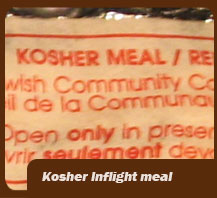
On the long-haul flight to Turkey and then on another flight to St Lucia while booking the ticket there was an option for a Kosher meal (Jews represent a nearly invisible religious demographic). While watching a film on the plane, the language options were Hebrew, Catalan, Arabic, etc. While attempting to login to Facebook there were many language options. Under the section Africa and Middle East there was Afrikaans (spoken by not even 0.1% of Africa), Hebrew (another minority language) and Arabic. Do you know what all of this tell us? Cultural agency, and cultural definition driven by pure market economics. [8]
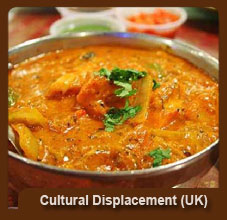
POWER - DISPLACEMENT Culture is power, but you first need a powerful culture. So in real world terms, Ethiopia and Kenya are entering into modernity. Ethiopia already has a highly institutionalized culture, religion, and script; Kenya does not. Who will be more displaced by modernity? So in some cases Africans just do not have a powerful enough or sophisticated (taboo but accurate word) culture. And being political correct in a fire does not help one escape the fire. For example Zulu food vs. Indian food. There is no hope of Zulu food conquering Indian food in a globalized world. Ethiopian food vs. Indian food, now with enough investment Ethiopian food does stand head-to-head. Indian food vs. Arabic food, there is no hope of Arabic food winning that war. Western clothing vs. Zulu clothing? Again no hope, since Zulu clothing is still in its nascent after all these centuries. But now West African clothing vs. European clothing there is a fighting chance. The power of agency determines much of the patterns of cultural dominance in the world. When Ancient Egypt was conquered it converted the invaders to the religion/culture of the 'conquered.' In Persia despite being destroyed by the Mongol armies, it was the conquering Mongols who surrendered their culture and gods for Islam. Islam had enough definition to displace the invaders culture and faith and supplant it with an Islamic-Mongol culture. [1]
Displacement is not only by external forces. Many cultures are displaced and absorbed by neighboring cultures in Africa. In Ethiopia this is evident with the Amhara. In South Africa with Zulu culture which becomes more monolithic as we come into modernity because of the dilution of sub-cultures as they merge into or are wholly displaced by the mother culture (or dominant culture of one Zulu people). Even in the cities we can see instances of people of Zulu heritage who socialize with Ethiopians become Ethiopianize. It happens more commonly with Somali and even more rapidly with Eritrean people if isolated and socialize with Ethiopians. It happens to Ethiopian Jews in Israel, but not by a direct agent by via music and popular Black culture. CULTURAL SUPERIOR PERCEPTIONS If we are honest with ourselves then solutions become very clear. If we think hard enough we know already why people do not want to be African, or reject African culture, native faiths, and prefer to be something else; It is not really a mystery. And this thing about Europeans demonizing African culture, well just imagine if they came to Africa and found Africans levitating and flying spacecraft, would they have demonized our culture then, sure they might have tried but it would not have stuck? Nobody successfully demonizes a culture that has more power than theirs. And people, of all races, creeds, and faiths, prefer to be associated with what they perceive to be more "successful." The perception of backwardness, true or false; the perception of unsophistication, true or false, all factored into why things in Africa were replaced often with other faiths, cultures, customs, etc. And it was no different in Arabia, China, Europe and India. What came in, that was perceived to be better was often adopted, integrated, or substituted. People with a higher degree of agency selectively adsorbed new cultures, technologies, etc, and made them their own. People with weaker agency got imposed and had no ability to successful make these new things their own, often their old ways were demonized and flushed out. That is the way of the world. AGENCY New | While most African cultures can be seen actively on the family level, and the day-to-day way people go about their lives, it seems to cut off when it comes to the corporate level. It does not become institutionalized in education, business, top level trading (stock markets), science, etc. European culture on the other hand is from top to bottom, not missing and inch of surface it interacts with in the lives of not only Europeans, but the entire world. So the cultural power of the Zulu people seems to stop dead after a certain level in society. They have no ritual holidays comparable to Eid and Easter, or the Jewish holidays. There is no ancient legacy institutionalized from which to draw new traditions from. And therefore it does not lend itself, outside of the odd ceremony, to the mainstay of the lives of South Africans. Ethiopian culture on the other hand does extend itself much further in the fabric of everyday Ethiopian society. It does have ancient traditions from which it draws its modern set up. Only people with strong cultural agency can look at new technologies and see the technologies as distinct from the culture of the techno-bearers. They can then skillful take the technology and leave what threatens their self-identity. The more agency the more this happens; the less agency the less this happens. It is as simple as that. If someone is now in a state of zero agency, such as an enslaved African, then the impact of religion, culture, socialization from the other will produce a greater than 80% conversion into a cultural orphan. PRESTIGE Muslims, Christians and Jews. Romans, Ethiopians, Chinese and Persians. What do they all have in common? They were able to add a sense of prestige to their identity. It was therefore something perceived as successful— a brand—that everyone wanted to be part of. To be Muslim in West Africa in the 12th century was a kind of high life club; associated with the rich merchants. And we still see it today in places like South Africa, and even Ethiopia-- a perception of wealth. In Tanzania being Arab usually means being wealthy, people see this and want to absorb into their own lives the secrets that produce this wealth, so they emulate the customs of those with this wealth. They certainly do not emulate the customs of the person who cannot feed himself. or the culture that has them going to the savanna to hunt every time they are hungry. No, they prefer the culture that produces a better way of life, that produces modernity. It is the perception of better (true or false is not being debated, and almost inconsequential) only the mechanism of how it happens. So then the Bible or democracy, and all things foreign, are all secondary factors in the pursuit of what is perceived to be better. People see an association with speaking French and success. The French have branded their language as a prestige language, something to be desired, like a Patek Philippe watch or a Lexus . Romantics have often lamented at the devaluing of African culture, they throw blame on Arabs, Europeans, everyone but self. Now get in a time machine and ask yourself honestly Why would demonizing Ethiopian culture not have worked? The Euro and the Arab have scripts, that will not impress and Ethiopian, they have scripts to. The European has St Peters, the Ethiopian has Gonder, the Arab has Mecca, the Indian has the Taj. The Hindu has the Gita, the Ethiopian has their own Bible, the Muslim has the Qur'an, the European has KJV. The contrast between these nations is not disparate. Not enough to create the notion of superiority. CULTURE AND CONQUEST New 11/2013 When the culture of a people fails, or is made to fail by an external oppression, they will absorb and replace what is lost with the culture available--usually the culture of their oppressors. When a people experience a trauma, it causes the natural cultural defenses to weaken and this allows in new cultural components from the strongest source. Humans, regardless of race, are just human biological blanks, we absorb the culture that we are settled in. Arabs are Arabs because of Arabic culture. A genetic Arab raised in a strong Jamaican culture, with no reference to their Arabic roots, will be Jamaican. This is why community is a fundamental component in the shaping and retaining the cultural character of any community. Often when a people are displaced they always have a reaction (one which may acquiesce or one which may reject the invading dominant culture). That reaction may often creatively try to recreate an image of its self by amalgamating bits and pieces, by integrating new ideas. Or it might violent reject the new culture, but still try to gather fragments and recreate itself in opposition to the oppressive force. Depending on agency levels, the new "cultures" may Africanized everything they absorb, but if agency is low the new ideas will unAfricanize the African in the process. And this can happen even when their is a conscious and violent reaction to an imposing culture. Because once people have lost a memory of themselves they might inherit (unconsciously) a "new identity" modeled on the oppressors template. New section What we have to appreciate is that culture is so dynamic it is impossible, most of the time, to identify a "pure" African (or anything) inside of any specific culture—especially in a world so globalized. People often look at a popular aspect of identity and culture and make the mistake of saying "Oh that is 100% African" or "100% European" . So the West African dress (heavily influenced with coming of Islam), the Masai beads and fabric (trade with Europeans), the Swahili culture, South African Shweshwe fabric (a European cloth adopted by Xhosa people), Ancient Egyptian chariots (from Syria), Native Americans on horses (from Spanish), 1,2,3,4 (numbers from Arabs), on and on. When you go back far enough you will often find it has a multi-cultural or multi-racial genesis. Today we see some of these things as exiting "As African" from eternity— but it is not the case. (And this is true for everywhere, esp Europe) New updates Tourism strips the living daylights out of African culture. In some respects it preserves the skin of culture, but hollows out and guts the essence of it. How sad is it to see Masai dancing just for tourist, with zero attachment to rites of passage, or celebration of the rains? How sad is it to see a Kora musician, who traditionally played in the royal court, now jumping up on down on a stage for Europeans? How sad is it to see Zulu culture kicking their feet in the air at airports and restaurants? Skinning and grinning for tips and smiles. Or a raindance performed for US dollars? Anyone wanting to witness Islamic culture will not be able to access it outside of its primarily function—for the religious needs of the adherence. Yet much of what is remaining of African culture can only be viewed within the context of a packaged holiday. The mask and artifacts that once were serious aspects of African spirituality are now exclusively crafted for the tourist market—devoid of any spiritual significance. Sacred ground and sacred rites now trampled by the beating feet of Western tourist. If they a tip they can take Facebook photos at The Door of no Return with joking gestures. You can get your African guide to hold your camera while you French kiss your lover in the dungeons that African were raped and brutalized in. All cultures have boundaries. Lines in the sand, our culture do not exist for tourist destinations. Not everyone who comes has an ALL ACCESS PASS for trivial holiday snaps of African rituals or African rites of passage. And it is high time Africans restore dignity by learning to say no! With no explanation or apology attached.
African culture is now attached to a dollar culture—the service industry of touristic prostitution —devoid of meaning and significance. When the tourist dollar dies so too does the culture. The "zoos" of African culture will, at this rate, be the hotels and other tourist nodes. The next generation of Africans in their baggy pants and Western antics, will bemoan the situation and say; "Long time ago we use to do these things, we can no longer remember what they mean." Personal Story: When we were filming in Goree Island, one of the slave ports in Senegal, We told the curator this site is a sacred site. And there needs to be special times where Africans can come and exclusively pay respect to their ancestors who perished in the Holocaust of enslavement. It is scared ground, and what pained us is we are descendants of that horrible journey. It is a solemn experience, having Europeans there while we were remembering our ancestors was inappropriate. Special times should be available to those who want to do more than take cute snaps. But there is another side to it. They are poor ignorant and exploited. We in the West are also to blame. How many of us use our resources to even visit these places, how many of us patronize our history? Not much support for all these rich entertainers with zero interest in their own culture and history. So the sad reality is our monuments are supported by White dollars; so whites have priority—a double tragedy. Had we done more in the Diaspora, we would have properly educated guides and have some control over having special viewing times for the Diaspora. Culture cannot be divorced from economy. MODERNITY DEGRADES CULTURE Some look at the West as the product of a technologically advanced decadent culture. The decadency being the product of the people's inherent culture. But suppose it is the "modernity" and "wealth" that produces decadence? That would mean as soon as Africa becomes economically on par with the West we too will lose cultural values, and descend into the same lifestyle of greed and excess, waste and indifference. We can look at all wonderful nations throughout history and see the descent into decadence with the rise of power.
We are not the past; we are the future. What sense is it to take what did not/does not work? What sense is it to take blindly? We cannot take a religion from the Khoisan just because their DNA is in our blood, no more that we use stone tools to dispatch meat. Our ancestors did XY and Z is critical for us to know, but it is not a 100% golden template of what we should be doing today. Every generation, as Fanon said, must, out of relative obscurity discover its mission, fulfill it, or betray it. And while we must draw on the past, we must also filter it to suit our modern situation. Taking the best traditions that suit our communities, nations, and individuals. And even that will vary depending region, religion, politics, and culture. Amos Wilson states: "The true nationalist is also not afraid to overthrow tradition when tradition is unproductive. He is not one who just gives obeisance to African tradition out of some blind ignorance. He is one who says: "Even though I revere the African past and I revere the African tradition, that tradition can be built upon. I have a right then to use the legacy of that tradition to confront the realities of my current times and thus modify that tradition and see to the survival of my people." “Foreign interest destroyed African culture”~ Common Afrocentric rhetoric. This statement exist when culture is not defined, when identity is not defined, when religion is not defined. What exactly did it destroy? Did it only destroy or did it also build as well? Did the culture of Persia not depend on external factors, did the culture of Venice not heavily been influenced by Islamic culture? Now with the coming of the CD the record was destroyed. Some good elements of the records were lost. The tactile, the imperfections were lost with the coming of the CD. Now we do not as sincere balanced people discuss that destruction without also talking about the benefits of the CD over the record. Now the CD has been “destroyed” (using their political polemic language) by the Mp3. Again we know it was not “destroyed” in an alarmist way but “replaced” and it was replaced for good reason. Some good things were lost with the exit of the CD, but more was gained. With every single change in the world there is good and bad. And at every junction people who are self-determined use agency (critical word) to make choices about their world. We accept that as the natural course of human history which can be found the word over. With the coming of the Europeans to America, the native Americans saw the benefits of the horse and adopted it into their culture. They did not do so an destroy their spiritual relationship to the old ways. It did not create an off-axis change. They became a great horse riding nation. With the coming of the Europeans and Arab trade the Masai say the colorful beds and adopted it into their culture to create a new Masai identity, which we celebrate and photography. IN CONTEXT New updates A culture is not one item divorced from the other items. You cannot pick out ritual scarification and leave the ethical and sociological functions that comes with it. You cannot look at nudity in some African cultures, such as the Reed Dance of South Africa, and transfer that to Penthouse. Ear piercing of young males in New York has no relationship to ear piercing of young Masai boys. One is fashion (New York), and one is a rite of passage with deep symbolic connections to identity (Masai). Especially when nudity in the Reed dance (virginity ritual) is ideologically 100% in the opposite direction of the ideology and function of Penthouse. With each item of culture is a history, a purpose, a relationship, and a placement within the broader culture. It is impossible ideological to take something as a discrete item from one culture and transplant it in an alien culture, which has no history or structures to support it. Thus the hijab, the tattoo, the body piercing, polygamy, ritual nudity, all are symbols of deeper ideological values, there are expressions of spiritual values, or sociological necessities in geographical or social context. Without this context, would have no meaning and hence no purpose.
African authentic culture is impacted negatively from many sides, and is a complex dilemma. The first and primary agent, which imposes is the dominance of European culture, which first came via slavery, then colonialism and apartheid. It always asserted itself by diminishing the value (socially and institutionally) of African culture. It was in Europe’s interest to create cultural orphans who worshiped all things European, thus making better subjects who had ambitions of approaching whiteness. Taking European names, language and dress ascended things of African origin, and thus secured the notion of African inferiority. Religion compounded this because now the image of divinity was the European cultural ideal. On the Islamic side there was less of an impact because, Islam mainly spread through African agents wielding African culture. Culture was a serious factor because if Islam appeared too alien it would not have gained adherence (David Robinson, Hudwick). This was not only true for Africa but also for Arabia where Islam met with great resistance out of fears of loss of Arabic culture heritage. None the less, at every turn where Arabs, or even Indians, got in a religious position over African people (parts of East Africa and South Africa) they tried to demonize things African (like music and dance) and replace them with notions of their culture. "Being Muslim" where Africans had no agency was the template for becoming more Indian or Arab. Just like being Christian was the template for being more European. But African culture on the continent also has a unique burden, because what is rarely discussed is the fact that they see the Diaspora as ideals—themselves – but in modernity. So not only is whiteness impacting Africa but Diaspora is having a terrible impact on identity. When children in Ethiopia now see Beyonce in her short skirt they relate to the wealth and status and see themselves through her expressions. No longer do they want to wear their habesha qemis, they do not want neTela (headscarf of very fine material). Modern means what Beyonce and Rihanna are doing, African culture is something to escape with high velocity.
A smaller impact is from cultural ignorance on the part of a Diaspora disconnected from the continent but trying to absorb aspects of Africa for their own self-worth and cultural identity. In doing so generalize and homogenize Africa in the same vein as the Western anthropologist. Using the same Eurocentric tools and perceptions to cherry pick aspects of Africa incongruously. So we see terms like "African spirituality" emerging as a new pseudo denomination. We see the loose generalization of a "tribal Africa" with drums and Umbuntu and libation, divorced from the reality of a diverse Africa. These over simplified echoes and fragments of authentic African spiritual experiences inadvertently are New World skeletons of deeper African symbolism. These trend have no reflective and seems halted in its own desires to promote a romantic image of Africa. But the downside is a loss of the depth of African culture, and therefore a lost of its diversity and intrinsic messages.
Today, native faiths are in direct competition with both Islam and Christianity for adherence. It is a tug of war which is seeing a decline in native beliefs. The advantage both Islam and Christianity has goes beyond mere economic, proselytizing personality, physical or political strength. And due to "political correctness" many shy from discussing a discourse on highly organized religions vs. less organized religions. The greater degree of institutionalize, the better an ideology or culture has at retaining its shape in adverse conditions. It can be argued that this factor of lack of sophistication, which is inherent in Islam and European Christianity, was the reason these native faiths could not become successful in modernity. Islam by contrast has systems of governance, system of hygiene, systems of fiqh (Islamic jurisprudence) and a very high degree of complexity which is sharply defined its cultural-religious identity. That structure is a fundamental factor in not only its identity but its image which has an aesthetic which markets and promotes its belief in a way which would be, in marketing terms, flawless. It has a script, a dress sense, a book of law a book of general public life, notions of time, and a very visible way of identifying its adherence. Now to make the point of religion and degrees of institutionalization and success or survivability we can look at Ethiopian identity and culture which is far more institutionalized that Zulu culture. It is no wonder that Ethiopians have a cuisine culture and Zulu people do not. It is no surprise that they have a stronger ancient music culture, a religion which has its own script. And all of this is said outside of the issue of political correctness which has good intentions but sometimes obscures objective analysis. What is true for religion and institutionalization is identically true for culture in general. The more sophisticated a culture is institutionalized, like Jewish culture or Indian culture the stronger its chances on the high seas of globalization, the better it stands against exploitation, the more resistant it is to appropriating foreign influences outside of its own agency.
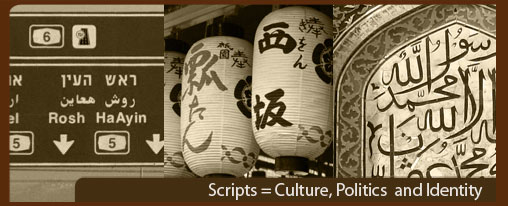
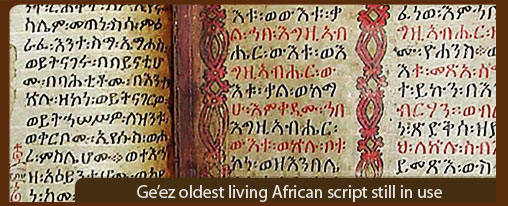
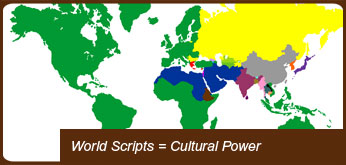
A script is not only a technology for writing the spoken word, and hence a vital form of communication. It is also a cultural symbol of a people and their identity. The mere sign of Arabic language carries the power of Islam and the Arab/Muslim people. Every time we see Amharic written we see the might of Ethiopian culture. A script is powerful political symbol used all over the world to show national identity. It is not accidental that Hebrew was reinstated when Israel was created in 1948.
Not only was Hebrew a fully functional part of unifying Jews, it was also a political symbol of their claim of a connection to Ancient Israel. There is no doubt the every time we see Japanese's we see Japanese's culture, every time we see Chinese we must think in terms of the culture, politics and identity of the Chinese. And by this same logic every time we see Latin we can almost map the history of conquered people and the politics of Western civilization on the world. There is a direct relationship (while not exclusive) to the presence of Latin and the power of Western imposition. (Turkey, most of Africa, all of Europe, etc).
LANGUAGE Language is the conveyor belt of culture, yet 32% of the endangered languages are African languages. To speak a language is to engage in a culture (Nehusi). The unique relationship between language and thought and the paradigm positions which grow out of it this thought processes are therefore endangered. Language is not only a means of passing information it is also a culture, to speak a language is to engage in a culture. To speak perfect Arabic is to expose yourself to the culture of Arabs, the same with Amharic and Hebrew; you could never learn Amharic and divorce this from Ethiopian culture. One of the challenges with African languages is that with the arrival of both modernity and the colonial languages, the natural inventory system within the languages died. New words came from the colonial source, as opposed to the languages own ability to invent new words for this new rapidly changing modern world. (Death of African languages) Urbanization is the slaughter house of African languages. And it is not only a threat from outside i.e. English. Amharic has, on its own, displaced more languages in Ethiopia than English. Note | The reason English is rich is because everyone who speaks it (including us) adds to its legacy. It is no longer a language of English people. As just writing English means we contribute to its expansion and diversity. The problem is the more we use it the richer we make it. New updates Cultures should cultivate, but not all aspects of culture do this. In these instances cultures, like everything else, can be host to inhumanity and racism. Purveyor of intolerance, cruelty, and stagnation. There is a logical fallacy that crept into aspects of African consciousness. It is the belief that if something is African it is by default better. Now 'African' just means 'of Africa' aka indigenous (past, present or future). So how does that broad parameter equal better simple because of its authorship and geography? So any and everything done in African we should do by default even when most things clash with each other? This is romance and not serious reality, and it comes from lack of knowledge of the continent and the world. Even Ancient Egypt and every great civilization took what worked over native things. The cross bow in West Africa. The camel in the Sahel. Actually it is this habit of taking and making yours that made Europe a super power. Hip Hop does influence world culture. For an example of how powerful it is in shaping urban youth culture just go to Japan. The problem is at the end of hip hop, as a generality, is nothing productive for modern African civilizations; it does not even fully own the cultural products it pushes all over the world: So it is a dead-end culture. It does more to arrest development than grow Africans into productive contributors. So yes, it is an example of cultural agency, but a largely negative cultural agency. Some aspects of African culture are negative, and range from non-productive to lethal. Some have no place in modernity. Some are hindrances to development and while they services those people in specific historical periods are made useless or redundant in modernity. Political correctness sometimes avoids a full disclosure on other people's culture, while racist attitudes assume that what is standard in the West should be standard for everyone. In some parts of South Africa, families do not allow a marriage unless the woman first proves she can give birth. Once she conceives the marriage is approved. Not everything in culture is good, because what is now happening is men are using this excuse to have pre-maritial sex without any intention of marrying the woman. It also creates a culture where a woman's worth is exclusively in her ability to give birth. Women are therefore under social pressure to have a child, even without a husband or financial means. Coupled with the labolla (dowry) crisis, it hurts the development of strong moral families. [3] Leblouh In Mauritania is a custom of "Gavage" (force feeding) to supplying a food. The practice is used on female children so they gain a full figure; as fatness is seen as beauty, and a sign of social status. Thin women have difficult getting married. It is correctly a form of child abuse in an non-subjective way. We do not need Western notions of beauty to come to this analysis. Nigeria, Morocco have less harsh ways of attain large size but the trend is the same. In Tanzania and much of Africa having a large gut on a man means he is wealthy and hence desirable. The health risk which Africans can gauge for themselves give us enough information to determine how we should handle these cultural trends. The West perceives everything African through a narrow lens of misunderstanding and cultural supremacy. FGM is a word constructed for pure shock value, to shop for funds for yet another campaign into a continent still perceived as dark and backward. And while they pass judgment over African people the plastic surgeries of California are advertising a new service called "Designer Vagina." So cutting is mutilation and barbaric in Africa; vogue and fashionable in Hollywood. However Female cutting, goes back as far as Ancient Egypt (Pharaonic circumcision) and as long as there is choice, and health safety in Female cutting then it is all culturally relative. False dichotomy is limiting the options available to Africans and generalizing a wide range of cutting practices which do not come near to mutilation. In the age old tradition of African music it served a very critical social function. Unfortunately our creative arts are today more a destructive distraction than cultural assets. (more coming soon)
Culture and religion share space and are deeply intertwined; sometimes dyadic, sometimes so complex it becomes a single irreducible unit. The purpose of a comparison is only to better facilitate how they interact with each other, but not to suggest a pure dichotomy between the two. Where there is religion there will always be culture—It can be debated if the reverse is true. Outside of the Abrahamic faiths, and perhaps Vodon, many African religions are inseparable from the ethnic identity and culture. So the religion of the Serer historically part of Serer identity, the religion of the Maasai is part of Maasai cultural and identity. To be Zulu culturally before Christianity more or less meant to take on the spirituality of the Zulu religion. And because religions rarely crossed ethnic or political lines there was no overt need to identify them as distinct "religions" vs. "culture." And still today part and parcel about being Somali, or Fulani is integrated into "being Muslim." Culture has been defined as the system of shared beliefs, values, customs, behaviors and artifacts that the members of society use to cope with their world and with one another, and that are transmitted from generation to generation through learning. It is institutionalized in art, clothing, taboos, rituals, architecture, linguistics, proverbs, films and stories. Culture in its broadest definition is the entire social heritage of humanity. Religion, like culture itself, consists of systematic patterns of beliefs, values, and behavior, acquired by people as a member of their society. These patterns are systematic because their manifestations are regular in occurrence and expression: they are shared by member of a group. Both religion and culture (if treated as discrete phenomenon) have traditions which services the group, whose meanings or relevance might be unknown to the user. Perhaps one difference is in religion the source and rational is a divine instruction for a particular action, while in "pure" culture it is informed by societal norms. So "do not eat pork" is an instruction from a divine origin in religion. In culture "do not eat pork" maybe a tradition established by ancestors and a social habit whose origin is long gone but still a factor shaping dietary habits. Religions will always create cultures, and culture becomes religion by attaching divinity to the behavior, habits, and attitudes. SPIRITUALITY See full article Linguistics African spirituality cannot exist as an authentic African paradigm as a standalone construction; it does not float in free space without roots in a specific African culture. The sense of a spiritual connection does not (in Africa) stand outside of an organized religious belief. When people say they are just "spiritual" they are saying they have a belief in divinity, but have no culture; no rituals, no communal responsibility, no structure — how is that being African? It is African elements without the discipline or loyalty to social or cultural structures. For example in Palo, participation in a community of Paleros is critical to growing spiritually and within the religious hierarchy. But some try to take piecemeal elements; ancestors, burning oils, and other cherry picked aspects of African religions and amass them into a heap called African spirituality, as distinct from the religions these elements come from. Despite the good intentions of many of these neo-spritualist, this paradigm is an out crop of the trivializing and misunderstanding of things African; part of the legacy of Eurocentrism. It is a de facto new religion, without a name. spirituality in Africa always has a culture, and every time you have a culture you have a religion. The rituals of Voodoo, Orisha, Serer, etc are all highly organized, and without exception, function in communal setting. They all have degrees of a priest class, ceremony, immolation, libation, religious holidays, creation stories, saints, divine systems of punishment and reward. African spirituality is the essences of the divine connection African people (pan African) have as a diverse group, it is just as varied from Ethiopia to South Africa, as it is varied from Sudan to India. There is no essentialistic quality or genetic relationship that binds all African religion or spiritual appreciation into one empirically definable block. The term "African" in the context here is the theater of study, with no suggestion of a monolith or exclusivity, bound by some phantom forces to the skin color of Africans or the geography of Africa. That religious or spiritual experience is locked to culture, and culture is locked to identity, and where one varies so to does the other. APPLICATION New Greeks, Romans, Aksum ites, and Egyptians: Four different cultures. When they went about the business of getting a level of the surface from which to construct their empires they all used the same technique. Now, maybe on the Greek spirit level was a painting of Zeus, maybe on the Roman Spirit level was a painting of Caesar, while on the Egyptian one was a picture of Maat, on the Aksumite Spirit level, on account of their Christian faith, was the Ethiopian Cross. All these spirit levels functioned to measure the level of the surface. Maybe in Ancient Egypt they used the sun, maybe in Switzerland they use A Tag Heuer with Swiss Movement™, the objective is the same-- Get to work on Time! Culture serves to empower the ideology the essentialist quality of a people, its application in the practical world shapes the aesthetic, but not always the function or the objectives of a society. This is another factor that must be considered when understanding the role of culture and technology. How do people integrate technologies and ways of doing things into the fabric of their cultural identity. Africa has 3000 distinct ethnic groups, 2000 languages. Home to the most genetically diverse people on Earth. So diverse that two Africans are more genetically different from each other than a Chinese and a European are from each other. Africa is the world's second-largest and second-most-populous continent. At about 30.2 million km², it covers six percent of the Earth's total surface area and 20.4 percent of the total land area. With approximately 58 countries. It occupies a wide dynamic latitude has; deserts, forest, snow, temperate climate, tropics, sub-tropics, lakes, the longest river, lowest point on Earth, mountain ranges. Now we have to ponder over these figures when we have these vulgar sweeping generalizations, which fit all of this diversity into one and two monolithic boxes. There are generalizations, which do define Africa, but none that are exclusive.
There might then be a KwaMashu township culture which is unique to KwaMashu in South Africa or Kalagi in Gambia. And then superimposed on this might be a Christian culture and then a general globalized culture: This is why it is called a culture complex. How these various cultures interact and conflict and resolve each other make up the unique culture of a specific group. These are all factors in culture which are condensed in any study. But "Being Ethiopian" like "Being Hawiye (Somali Clan)" switches priority at any given moment. Even with subtle distinctions between being Habesha vs. being Ethiopian National. All of these aspects of identity have unique cultural attachments. Where does Muslim culture stop and Somali or Fulani culture begin? How can you tear Ethiopian Christianity out of Ethiopia? Taking Islam out of West Africa is like trying to take the green out of grass. In any instant someone could be more Muslim than Somali and then 2 seconds later be more Somali than Muslim (if we tried to split it apart). All of us live in a 21st century world which has a serious impact on globalized socialization. In other words without even knowing it we behave as people in a global cultural village with globalized interactions. When you see the Masai culture, and the culture of say Afro-Brazilians, or African Caribbean people, do not let the fact that Masai are in Africa mean it is older or more authentic. Some of these "popular African cultures" are not ancient cultures and peoples. Some of them are just as subjected to the same Western forces, displacement, and diffusion as those in the New World. No Masai or Samburu wore beads before Europeans showed up. So culture is complex, not static and under constant influence. CULTURE IS CIVILIZATION
The value assigned to Chinese culture and Islamic culture can be seen everywhere by the international accommodation these cultures are given. Despite Ethiopia (ኢትዮጵያ) being the cultural gem of Africa, with 70 million people, its dominances beyond its borders (Ethiopia and her Diaspora) is extremely limited. A look at Internet technology shows accommodation for all scripts, DVD subtitles come in many languages including non-Latin scripts from Hebrew to Simplified Chinese, Arabic and even Hindi. But rarely any Amharic, beyond Ethiopian Airlines and the NHS in the UK. The commercial value of African languages is linked to the volume or market value of African speakers purchasing DVDs, accessing in-flight services, etc. If you book a flight on-line, you can select Kosher (despite Jewish people being a serious minority at 13 million: less than the population of Lagos), Moslem meals {sic}, etc. These cultures have globally accommodation due to their cultural and economic dominance. The economic "value" of Jews is reflective in the cultural accommodation they are given globally. The economic "value" of Muslims means that all over the world you find accommodation for the Islamic diet, not to mention that 1/5 are Muslim. There is a direct relationship between the economic success of cultures and their physical presence in global societies. It can be used to measure the impact or the global footprint cultures make. The indirect de-emphasis on accommodating Africans is by no means a racist plot, but moreover a measure of the outward extent of African presents in the real world. If Africa tomorrow became an economic giant, these markets would naturally re-orientate and accommodate African culture. DVD manufactures would include Hausa in the list of languages to capture the Hausa market. Just like Chinese restaurants in the UK realized serving Halal ( حلال ) food increased their market share. If African dress is demanded by all African elites, as opposed to the fitted Western suits of Italian designers, overnight markets will shift to accommodate this trend. New economic opportunities will globally emerge for makers of these garments and the entire African industry will be stimulated. So there is a strong relationship between cultural agency and market forces and then ultimately the cultural footprint of Africa in a globalized world.
Agency in South Africa is also not the designs of African politicians who manage this Southern European plantation. The cultural footprint of South Africa is expressed almost exclusively via White European cultural agents. And again in Kenya we see the "Kenyan culture" that the world celebrates is not the product of African agents, but the product of European agents and their "lens" on what is and what is not Kenyan culture. The beautiful mask and ornaments sold in airports are filtered aspects of Kenyan culture and Africans are generally absent from that process.
The agents of socialization are 1. Family 2. Religion 3. Peer Group 4. Education 5. Economic 6. Legal systems 7. Penal systems 8. Mass media and News media Organizations. Karenga identifies six areas of cultural activity: History, Religion, Social organization, Economic organization, Political organization, and Creative Production. [2] Culture is therefore a complete process, that is not limited to "the people", it is at a legal level, a family level, an a political level. When you land in Israel you see a complete set of systems working in tandem which promote an Israeli national culture. When you land in the USA you see American culture, it is not a coincidence those things which shout "This is America". As mentioned before, it might be called Western, but it is someone's culture. French culture, Italian culture, etc are promoted at a state level. So in Africa the political process has an inescapable responsibility to African culture.
Culture is the most pertinent response to these challenges. Culture instructs our lives with values and habits which service our humanity. Many aspects of African culture have a role in our continuation. When you see a huge taboo sign, that is because long time ago, African ancestors realized, to walk down that road is to entertain failure. It became institutionalized in culture. Cultures like religion uses "do's" and "dont's" to frame structures which maintain the societies from which they come. Marriage, eating, death, all have no-no areas to in principle protect those community characteristics which are passed down the generations. What we must always considering in studying Africa is the multiplicity of identities and the dynamic nature of human culture. Cultures smash through borders, languages, notions of ethnicity, religion and political parties. So African identity is not one hard thing but a multitude of self-imposed conditions which ideologically run fluidly across indigenous Africa; it is not a scientific observation but a cultural-political one. Human cultures share a common theme. Family is central; the collection of cultural features is politically and sociologically threaded together for common interest where Africa is concerned. So what is the real issue the West has with the Hijab? The Hijab is a cultural political symbol of the face of the rise of Islam. Every year more the streets of Europe see more women wearing this "alien" dress. The traditional imposition of White supremacy is being beaten back by an pigmented culture. Now the Muslim is again in Europe, but not with weapons of war, but weapons of culture. We can now see White skinned British girls walking down Oxford street in hijab which spits in the face of "Europeanization." And the new cuisine, language are all carried on the wings multiculturalism, the same multiculturalism that keeps the West powerful via fresh labor, skills, and money. So every attempt is being made to have the cake and eat it to, keep the perks of diversity while attempt to Europeanize them as they did with the African-Caribbean community. The irony is that the strength of "the other" in Europe is because of their cultural identity. Once that is gone the social function that multiculturalism serves will vanish and become social delinquency.
RESISTANCE Humans are all the same, if you cut us we bleed, if you oppress us we rebel. Makes no difference if it is from the chains of slavery or the ovens of Nazi Germany. And all people in bad situation have degrees of culpability and self-harm. The one factor that influences that degree is culture and the identity that comes out of that culture. The more institutionalize that culture and identity the harder it will be to enslave a people or maintain them in a state of unconscious oppression. Post Nazi-Germany Jews actually create a stronger Jewish identity creating in the wake of their Holocaust new cultural/religious structures which reinforced Jewishness. In the case of the African-American the cultures which came across the Atlantic during the African Holocaust held out for centuries but under the pressure and ferocity of the Maafa collapsed into a state where the cultural structures failed as means of retaining identity. It can be argued that if the Jews were also exposed to the peculiar conditions of the Maafa a similar pattern of destruction would have been visited on them culturally. The only saving factor was as a group they had a highly Institutionalize culture and the short duration of the Jewish Holocaust. Culturally Africans in America were from far too diverse ethnic groups to retain an cultural identity–the solution or response was they made a new one. Critical mass theory applied to identity: if you do not have enough matter (identity) in oppression your system collapses under pressure. If you have enough critical matter even oppression will have the opposite desired effect by creating a super nova of locating revolution within the structures of cultural identity. Testimony to this is the Western assault on Muslim peoples globally. Since the crusades this assault has done nothing be reform different responses from Muslim communities, it has never quelled Islam's potency as a cultural-ideological contender for world power. (This section introduces an argument against, see next section for "pro")
When we put a challenge to it we start to realize it is a figment of our imagination not really an anthropological reality. If language carries culture then already it is proving Africa is not a cultural monolith. If religion carries culture then already Islam's distribution in Africa proves the monolithic notion has in flaws. CULTURAL COMMONALITY (This section introduces an argument for commonality) Words have limits. Just try using only words to describe the smell of the perfume in an Ethiopian church. These limits of words to express what is African culture do not mean it is not there. So words can not express what makes something African from Ethiopia to Ghana. But the complete cultural package is recognized at some higher level by the viewer, as African.
African culture today is varied and diverse yet a common thread latches these diverse cultures into one African family. Diversity does not mean all of these cultures do not come under a central Pan-African umbrella because there is a perceived widespread psychological and cultural themes and patterns that there are unique to African people. This view of seeing a universality in Africa is admittedly a political one because of a common history and a common need for Pan-African unity.
African culture is far greater than the sum of the individual parts. Regardless of ingredients, cultural identity is expressed through its core aesthetic. If one likens African culture to jazz, which contains drums, piano, and trumpet? These ingredients are not unique to jazz as Scandinavian music may have in the same ingredients but jazz is instantly recognizable and radically different from Scandinavian music. African culture may have in non-exclusive and global ingredients such as reverence for; ancestors, marriage traditions, spirituality, dance but how these various ingredients interact in both a tangible and intangible way constitutes the cultural uniqueness. Senghor (1966), in comparing Africans and Europeans, argues that there is a unique African world view focused on what he describes as "being" and "life forces." He writes The African has always and everywhere presented a concept of the world which is diametrically opposed to the traditional philosophy of Europe. The latter is essentially static, objective, dichotomous; it is, in fact, dualistic, in that it makes an absolute distinction between body and soul, matter and spirit. It is founded on separation and opposition, on analysis and conflict. The African, on the other hand, conceives the world, beyond the diversity of its forms, as a fundamentally mobile yet unique reality that seeks synthesis....This reality is being, in the ontological sense of the word, and it is life force. For the African, matter in the sense the Europeans understand it, is only a system of signs which translates the single reality of the universe: being, which is spirit, which is life force. Thus, the whole universe appears as an infinitely small, and at the same time infinitely large, network of life forces…" CULTURAL SHAME | SUPEREGO | MORALS
The moral foundation of African culture across the African world is communal based. So fundamental is this in informing African ethics that everything; dance, music, marriage is impacted upon. Music is communal, harvesting crops is communal, even eating is communal: Every ritual and rite is tied into bonding and reaffirming communal bonds. So when people say Gay marriage is un-African, despite their inability to articulate it beyond "un-African," they are speaking to the moral communal foundation of African societies which always place the community above the individual. Rights also cannot supersede those "rights" ordained in nature; those things which are incompatible with peoplehood are therefore generally incompatible with African values. And in this communal setting, marriage is a coming together of communities, via two individuals, with the promise of peoplehood. Polygyny then comes into logic by satisfying not a lustful role, but a social one.
Outside of these exceptions Ethiopian society is highly conservative. Two people kissing on national television would set the nation off. So certain areas have unwritten rules of "exceptions" it is a kind of "slack" that keeps the balance. But if that balance starts to contaminate the larger moral pool, then it is ruthlessly crushed. To the outsider it might seem like double standards but it is the run-off, or 'acceptable negative' a society accommodates. And this is perhaps where African cultures differ from their Western counterpart, because in the West vulgarity and antisocial behavior is an identity in itself, something to be proud off. Even an Ethiopian prostitute would shake her head in disgust at the goings-on and pride of a Western porn star. And what we have to understand is how shame is dealt with even in the act of transgression. So an African woman, from a conservative society, engages in sex outside of marriage there is a coyness even when in the act. A respectability even in a perceived indignity. A shyness and a denial of enjoyment, so as not to complete feel as if they have lost their moral anchor. In African societies even the most liberal know to keep their liberal habits outside of the gaze of the community. Everyone knows in Ethiopia certain women go into bars and drink and solicit men. But they all know once you hit the public streets you still must fit into the cultural ideal of modest behavior. African culture would take on an entire dynamic if we isolated township culture in South Africa is being archetypal of African culture. These cultures are direct products of apartheid and poverty. And we must distinguish between the cultural habits associated with poor education and impoverishment.(such as alcoholism and sexual promiscuity) Across Africa, now and then, sexual relationships have been imposed upon by certain cultural taboos. For example, in Ethiopia, and most of modern-Africa, overt display of affection are culturally frowned on. While in Europe it is not uncommon to see two people tongue kissing in public. All kinds of sexuality related habits are governed by the majority culture of a specific location across the globe. It would be fair to say that modesty is the overriding theme in African sexuality in the public space. The culture core of Africa from KMT to Aksum to now has retained a unique allegiance to life and those systems which produce life. That fundamental relationship to harmony with nature is unaltered, even with the coming of Christianity. The centrality of music and dance and family is unaltered. The minutia details and rituals may have altered but the communities still revere their ancestors and celebrate new life and marriage. Cultural imperialism is the domination of one culture over another other by a deliberate policy or by economic or technological superiority. Africa is undoubtedly the victim of cultural imperialism and its mechanisms today are none other than globalization. The agents of this imperialism are mass media and unfair trade. The consequences of this imperialism are under-development, lost of identity and language and destruction of markets (e.g. where traditional African clothes are replaced with Western ones). Cultural imperialism can take the form of an active, formal policy or a general attitude. ( Alexander, Victoria D. (2003). "The Cultural Diamond - The Production of Culture". ) This form of imperialism first entered Africa with colonialism, both Arab and European. It is also perpetuated via religion, education, language, and socialization. It is not however exclusively a Africa v non-African issue. Continental Africans see African-Americans as their mirror in modernity. As the imposition of African-American identity in style, music and mannerisms is imposed on African communities. Nor is cultural imperialism in Africa confined to this era. The history of Africa, as with everywhere else in the world, marked with degrees of cultural imperialism. And in Ancient Ethiopia and Ancient Egypt we see examples of this. You will notice with all the "integration" going around Jews and Muslims do not do much of it in the West. Sure you might work next to Abdul in the office but when he goes home he is living on a middle class Pakistani Barking (East London) address, he is eating Curry from his Uncle's restaurant, he will get married in Pakistan, on Friday he goes to the Mosque in his Kamiz. He speak Urdu to his family, he is not integrated where he loses himself. The same is not true for the new generation of African Caribbean people in the UK, who with the exception of one and two words in patois, is a cultural orphan of English culture.
This is however a baseless Eurocentric anthropological fringe theory which is typical of ignorance of African culture. Lip stretching, like neck stretching in Asia or foot binding are culturally localized types of beauty, which are not rooted in European sensibilities and hence not subjected to Eurocentric logic. In absence of slavery similar body ornaments are worn by both sexes of the Suyá people, a Brazilian group. Europeans see what is perceived as "ugly" and assume their perceptions are universal and hence seek reasons (from their own culture) why someone would practice certain rituals. [4] Since the 1960s, the predominant approach to social and cultural research among social scientists has been that of isolationist, clearly defined society, population, sector, geographically defined area. This approach has been championed as a progressive replacement to the former tradition of Eurocentric broad sweeping generalizations at higher levels of social organization such as the ethnic group, society, nation or geographical regions. [5] CRISIS | NO CULTURAL OWNERSHIP
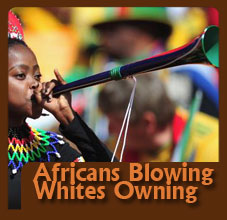
Like avoiding an elephant in the middle of downtown New York, Whites have an amazing way of talking around the subject of economic ownership in this department.
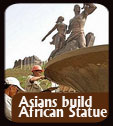
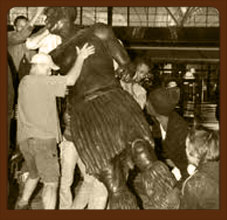
An independent African run site did a survey “are we better off today, compared to yesterday” 70% of the people recognized “we are worst off today but richer.” The glorious efforts in America in the 60’s, under segregations, had more elements of self-determination and agency that today. More business ownership and more importantly a do-for-self attitude. Wade in Senegal gave Asians $28 Million to build an African monument. The Zulu cultural department had no problem, nor saw a conflict of agency when they gave a White-Boer artist R3 million to build a statue of the warrior Shaka Zulu, he made it look weak so they did something smart, they let him try again. 10,000 years of sculpting and crafting the African artist is never seen "valuable" enough to be given the opportunities to represent African culture.
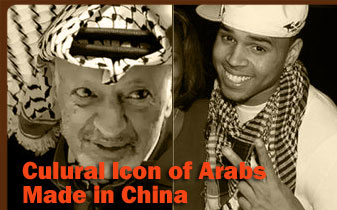
Keffiyeh + Flamenco ExampleWith the rise of China this issue of ownership of culture has not only impacted Africa but also most of the world. With economic might, cheap labor, China has the infrastructure to capitalize on anything it puts through its monster production systems.
This is the reality of globalization where cultural property, if not properly managed can freely be appropriated by other non-related cultures. China has its eyes on everything African; aesthetic, fabric, art and music. They have the economic power and the distribution muscle to dominate the market at the expense of everyone else. The challenge is how in a free market does Africa protect its culture from exploitation? Spanish flamenco, a music of Spain with deep Moorish influences is now so popular in Japan that their are more Japanese experts and scholars on the subject than in all of Spain. This has to be stated to show that it is not a one way racial situation. Clearly one solution is to first capitalize on it and put it on the international market. But the rate of Westernization going on in Africa means the value of African traditions products are diminished. Hand crafted chairs replaced by cheap plastic from China, beautiful African art replaced by mass produced Ikea type paintings. The local art dies and has no foot hold locally let alone globally. China has the distribution, the labor, the business models to dominate. And Africa slow to capitalize has zero resistance. See also African Race
We can contrast Africaness from the modern phenomenon of Blackness. They must be treated as two distinctive identity formations, as they have their foundations in different paradigms while sharing similar authors and realities. Black culture in America is not based on the same foundation as Ethiopian culture in Ethiopia. Ethiopia does not have a "black" culture, it has a culture very specific with language, script, religion, music, and what is very unique about this is the Ethiopian agency. African American culture makes a link to its African mother culture. It draws on African creativity. On the other hand, black culture makes a link to the social prisons of Western engineering. It is a culture internalizing a modern oppression. "White culture" sure like playing tennis, golf, playing electric guitar and scuba diving. Black culture is supposed to be playing basketball and listening to Hip Hop, pants hanging of your bum. That might be called inner city urban culture. But where has this been written down? On the TV screens, in the scripts of White American writers. In the fantasies of the forces that shape and contain a people's vision of themselves. If you come from the middle class Caribbean background your recreational activities will, just as your European counterpart, include tennis and even surfing. It is not black or white is the culture of class and access to sports with a higher financial entry requirement. So the statement about so-called "black" cultures is a statement about a comfort with poverty defining "blackness." Let us not confuse real culture from this engineered culture in the West, which people are made to conform to. A tennis ball and a basketball have no race attached. Speaking good English and walking properly are not about race; but socialization and education. Lack of, produces slouching, and slang. In Israel Ethiopians are Black but Ethiopians did not consider themselves to be Black when they arrived. You see young people identifying with reggae music, Afro-Caribbean culture that people tend to view as natural, but it's not natural. It's a choice they made, because it speaks to them. (Kaplan) All over the African world where African people from anywhere come into contact with mainstream "Black" culture there is a current creating new Blackness as an identity. Just as consciousness via music and revolution has created a global Pan-African identity. But there is a difference. Africaness is rooted in a cultural understanding of African peoples links and interconnectedness to development and civilization, Blackness on the other hand is link to a culture relevant to YouTube and MTV base. Blackness has zero concern with anything beyond attitude, speaking bad English, wearing your pants low, walking with bad posture, and gaining status by being as ignorant as possible.
While Africaness seeks to create an alternative to the White world linguistics and identity, Blackness is a sub-culture in Whiteness. It is not concerned with Swahili but broken English. It is not concerned with African clothing - but with Western designer garments worn low. Its historical references are not the battles between Ancient Egypt and Nubia but between Tupac and Biggie. Africaness is concerned with our humanity, while Blackness is concerned with consumerism. It is a statement of ownership of self and ideals. Africaness defines itself and creates it's own agenda. Blackness is defined as the opposite of whiteness and it's agenda has been pre-arranged . The New Blackness takes African people further into a Western identity trap of still being alienated but without a framework for self-development. If you took Jews and Indian, and removed their culture what would you have? Would you have all those Noble Prize winners, would you have all those Indian brain surgeons? The Jew without culture, under the terms of the African Holocaust would produce the same urban disease we see in African American inner cities. It would produce the same violence and hopelessness in the townships of KwaMashu and parts of Soweto. Culture and not biology determine why Jews, Indians, Arabs in the West, Japanese and all other ethnic groups are able to do what African Americans cannot. The acceptance of "baby mama" status is tolerable only in places where culture is destroyed, the culture of anti-intellectualism and thug life is only again acceptable if solid culture is void. These are symptoms of people who have lost their cultural identity, and thus take on rootless urbanized cultures. See Music and Dance in African Religion
This author suggest two types of change "off Axis change" and "on axis change", where the axis is the core value formation of a culture. Because we run the risk of making an error of confusion cultural innovation with radical core changes. For example Franz Boas viewed culture as consisting of countless loose threads, most of foreign origin, but which were woven together to fit into their new cultural construction. Discrete elements which become more interrelated as time passes--bluring their discreetness in the process. Now on axis change allows these elements as Boas notes to be woven together under the authorship of the people receiving innovations. In the off-axis setup this process is overwhelmed by imposition. Christianity has radically "changed" the Gikuyu culture in Kenya. Yet the ancient Gikuyu would still recognize Gikuyu of today as their relatives. The language the core customs and rituals, even with the Christian faith are still recognizable. While subjective, the same cannot be said for the forced African Diaspora who would be unrecognizable to say the Akan people in Ghana. In marriage cultures all over Africa cows as a dowry gift (Mahr مهر ) has been replaced by blankets (especially in Southern Africa) and money. This is the cultural response to practical changes in world currency. However, that is not a core change since the spirit of labolla/mahr/dowry remains. The principles of a wedding gift remain despite a change in currency. the world has swung left and right but culture of marriage is over 7000 years old.
Technology has altered much of our landscape, people in Gambia now go to the Mosque by car as oppose to by horse. People talk on mobile phones, but the greetings are still "Assalam Alaikum." Technology has shaped the culture but it has not made a significant change to the core Islamic faith, despite the Adhan now being called out on a loud speaker and electricity being in every Mosque. People now read Qur'an on Ipads is an evolution but not a change which suggest Islam is becoming Scientology. Between Monday and Friday every person undergoes "change" it however would be a misrepresentation of the facts to suggest this "change" means people become radically different individuals. The cliche express "cultures change they are not static"' is being abused to justify radical alternation to African cultures. So the barriers which protect African identity are now being torn down under the word "cultures are not static." New markets and foreign destructive habits can now nest in African societies under the banner of "cultures change." But cultures even if they change should always change under the process of agency. There is no dispute that cultures adapt and evolve and reply to reality, but they ethics are pretty much rooted in the original foundational paradigm which fostered them. Everything changes and there is a degree of subjectivity but a change must be weighed in unless we confuse natural variations and adaptations with some notion of Darwinian evolution. And at the end of the day it is called "African" culture for a reason greater than it being a black step-child of European culture.
The treatment of Africa seems to imply a constant historical and cultural monolith that was at peace and pure before a certain set of invasions. How is the cultural shift from Ethiopia to Benin homogeneous while the cultures from Ethiopia to Yemen 22Km away are heterogeneous ? Linguistics alone tells of a completely different historical relationship. Gene flow tells of another complicated relationship to the so-called Middle East (Lemba, Ethiopia, Swahili, Somali, etc). However genes have been coming in and out of Africa since pre-history. Undue weight is given to genetics when we already know people did not sit still. Interaction in ancient times was no different from modern times, only that journeys took longer. EVERYONE HAS CULTURE
We also see people saying "cultural dress" ; the mental process is creating a "normal dress" and then a "cultural dress" and while it is 100% accurate, we need to examine how European culture is so normalized it forces everyone else's culture to be "Culture." In the West it is customary to say "Lets go for a drink " this is an aspect of socialization and culture. It is the cultural way in which people engage with one another. It is however not the standard. In the Sahel of Mali the custom every time people meet is to sit down and drink sweet coffee. Hakim Adi | Everybody has to, understand their history, their past and the role which culture plays in the lives of human beings. You can't exist as a human being outside of a culture. We all speak a particular language; we all have a particular way of living, lifestyle, and so on and so forth. So these are all, if you like, aspects of culture which are important but they have to be, you know, they have to be fully recognized for us to really exist as human beings. And I think that's something which is very often being denied to people or being devalued in one way or another as if the cultures of people of African origin – particularly those in the Diaspora, but also on the continent – are not seen as being as important as the cultures of Europe, or the institutions of Europe. CORRUPTED CULTURES Cultural corruption and superimposition is when elements of a culture are replaced with similar customs which have completely different attachments. Traditionally in some African communities alcohol served as a way in which certain ordained spirit people communed with the other realms: Alcohol (palm wine) served as a purely "religious" function in the society. A way of specifically related to another world in specific rituals by specific people. With the coming of the European alcohol began to take on a new function as a social drink. The trade in slaves for alcohol created a commercial grade brew which was shifted out of the religious realm to exacerbate and encourage social drinking. This only increased with the depression from the trauma of slavery and colonialism dug deeper into African communities. Some would point to the libation rituals but the pouring of alcohol became a form of corrupted culture. Which became so common place it actually gives the illusion of being part of traditional African culture. However the social drinking was never a mainstay of African culture. The consequences of this alteration to cultural purpose is a form of cultural corruption by superimposing other cultural values in place of pre-existing similar cultures. i.e. usage of alcohol.
Cultural relativism assumes that the practices within a specific culture have been created through agency and therefore have a relevance and value that outsiders must be sensitive to when hurling critique. The Western anthropologist has done a lot of misdiagnoses and created paradigms of primitive and advanced based on cultural bias. That has intern washed into academia where the very people from these cultures absorb this discourse and reapply the misdiagnoses to their own communities; a kind of Heisenberg paradox. To assume pleasure in the Somali world is equal to pleasure in the Western context is to assume a normality or expectation across cultures. If all humans are equal then the direction in which sexual pleasure take in the Somali community cannot be compared to those of the Western World, which places the female orgasm as being central to the female sexual experience; which parallels the male sexual experience. A classic example of cultural relative is what was observed by psychologist Gregory Bateson, in traditional Balinese families, mothers routinely stroke the penises of their young sons, and such behavior is considered no more incestuous than breast-feeding. Incest is also not illegal in Israel, perhaps a response to the low population issues. So we see as Sam Vaknin suggest taboos or in this case lack of taboo, do ultimately respond to necessity. In many African countries woman may gain their satisfaction from her husband’s orgasmic intensity, knowing he has enjoyed intercourse with them. It is not that they cannot also have orgasms, but the value attached to it is different; sex after all is a state of mind. In some parts of Somalia women put special herbs in their vagina to cause tightness for their husbands. Some feminist will rush to label this as a form of oppression, but not if cultures are valued as equals and understood in context of plurality. How can a Western woman dictate to an African woman how she should experience sexual pleasure? And even within Western culture we see complex sexual roles of domination and bondage. And this is why the issue of so-called female genital mutilation becomes an issue as outlined in the groundbreaking work of Fuambai Ahmadu and Wairimu Njambi. The only stipulation is choice and access to a full discourse of information from within that culture. But the minute the Somali woman leaves Somalia she is confronted with a Western world screaming “oppression”, she is then forced to review her culture but against a backdrop of Primitive v Progressive. All the while the Western woman is rushing to the Designer Vagina clinic to get the very procedure done that the Somali woman has been doing for centuries. See Ethics CULTURE AND DEVELOPMENT IMPACT
Thornton (1999) makes the point that the indicators of centralization happen due to geographical and other demands. He identifies the savanna which can accommodate horses, the jungles which cannot, and the tropic grasslands, which cannot accommodate horses. So geographical landscape was an overriding factor, above ethnicity, in how warfare was fought in historical Africa. It is critical to discern these process because we run the risk of saying things are European impositions when they are more responses to challenges of state management. Case in point being certain features of Islam, are they the product of Arab ethnic sensibilities or the practicality of desert life? Where desert life is the source we will find perfect harmony without desert dwelling communities independent of ethnicity. Stating that Africans didn't not have a penal system, depends on if we are speaking about the hunter-gather experience or Kemet. We will therefore find more similarities in Ancient Kemet and Roman because of the challenges faced by macro-empire nations. Therefore Kemet has less in common with the Khoi Khoi pre-Iron age cultures. With the challenges of greater population interaction with numbers above 200,000 pose different hygiene, time, environmental, social, religious necessities. The structures that service 1000 people are radically unpractical when serving millions. Another example is nudity in very large populations always seem to create public decency issues. While in small communities nudity is less of a concern. Studying culture cannot divorce these questions as a separate thesis because they are critical in the holistic appreciation of cultures.
There is no such thing as African Purity, cultures smash through deserts and across trade routes, and they travel through immigration borders and disregarding our notions of geography and race. Throughout history, Africa has influenced, and been influence. Names, foods, cultures, religions have jumped between Asia and Africa from the dawn of humanity. Many names like Amiri, Baraka, Kimani, Shakur, Aaliyah, Rihanna, all have connections with the Islamic world (Africa, Persian, Turkey, Berber, and Arabia). Spellings often vary but it is often to specify the exact origin of the name. Also names appear in different languages differently such as John (English) and Yohannes (Ethiopian). Some people have issues with putting boxes around people; however, the politics of agency demand that people with similarity do so in response to a world that does prejudice people and group them into boxes for easy oppression. Moreover, human behavior fundamental, for ease and function, has a natural habit of defining and naming creation. Who is a Muslim, who is a male, who is a female, where is Africa; all of these have definitions, which are critical in language and human behavior If the color red is blue to some people and green to another, then red as a color has no meaning. CULTURAL APPROPRIATION Many African-American names have connections with the Islamic world (Africa, Persian, Turkey, Berber, and Arabia). And those names which are unique African-American creations such as Shaqwana are based on Arabic Trilateral root constant and are fundamental rooted in the Arabic or Afro-Asiatic sonic world. The usage of Arabic names by popular African-Americans has completely shift the ownership of theses names. So at the current rate, by the close of this century African Americans will have colonized many Arabic name. Once upon a time if we said Rihanna or Raheem or Alliyah you would see an image of an Arab girl-- Now those names are 100% associated with African-Americans. And this is not unique to history, as many English names Rachel, Layla have been absorbed into the cultural world of Britain, so much so that they are considered English names. Religion also played a major role in Europe in adsorbing names from the Biblical world. CULTURALLY AFRICAN| Continent - Diaspora It has become critical to clarify African identity because commercialization and integration is forcing African Diasporian into the cultural orphanages of White-America. Hence the African-Diasporian culture is nothing more than a veneer and mirror of mainstream America – but painted Black. The challenge must be placed because if the only difference is skin complexion and being at the bottom of every social-economic indicator, then what kind of identity is that? The cultural fabric of African lives must speak to something unique and distinctive that has merit and meaning in how African-Diasporian live and dream; that uniqueness only enriches humanity. But a close look at BET, Ebony and Jet shows only a blackened White culture in every materialistic way. At this rate the future of a distinctive African-Diasporian is under threat of extinction. To be culturally African is to possess a distinctive culture, which has its values and orientation in the indigenous cultures of Africa. To therefore speak a native African language, have an African worldview, wear African dress, as distinctive from the dress code of other groups, can be seen as cultural identifiers. It is however more than a shopping list of items to tick “yes” or “no” to. The following question is posed: what about Europeans who embrace African culture and are even capable of speaking African languages? It is undeniable that they are practitioners of African culture but it does not make them African but merely Europeans who have embraced African culture. Some in the Diaspora who have lost their culture to the African Holocaust feel isolated and unattached. But having a specific 'tribe' is not critical to having a "culture."The diaspora 'tribe' is free to combine African culture into a unique quilt to be the only Pan-African 'tribe' in the world. And a symbol of a unified African people. And many cultured Diasporians have done this, we see the work of Maulana Karenga which articulates a new world African cultural identity with festivals such as Kwanzaa. There are also rich New World African cultural traditions which have made a new African culture, especially in the Caribbean and South American Diaspora (steel Pan, music, culinary traditions, etc). These are all direct continuations of the African experience, and despite being shaped by multicultural forces they are primarily informed by their African roots. Just like the millions of Africans across the globe who speak European languages, eat European food, behave like Europeans, engage in Eurocentric understandings of religion are no closer to actually being European. They still are physically Africans who are European in mentality and attitudes. The placement of these people in the African world is debatable. The current and most progressive theory is to re-educate these people to give them an understanding of themselves. For it is unnatural to act in the image of those who oppressed you. Just as climate played a role in physical traits such as dark skin, it can be argued that culture evolved to a specific reality. However, the cultures of African people extend beyond their physical geography and are informed not only by geography, but also by physical ethnic traits. When you go to Haiti or Cuba and see Africans there, is the culture in the Diaspora less African? Why would it be. Some suggest because of fusion and heavy European influence-- but not all were influenced to wash out the African connection. And this also took place inside of African cultures. Even Ethiopia, which escaped the colonialist has fusion elements from Italy brief occupation which today are part and parcel of Ethiopian culture. The cultures of Cape Town, Nairobi, of even "tribal" people like the Maasai, and Samburu, have in elements introduced from outside of Africa. The mark difference is in degrees and the fact that African on the continent have retained much of their native names and languages. AFRICAN AMERICAN CULTURE IS AFRICAN
The AU sees the Diaspora as part of Africa. America is the new world and in that process, Africans via the most brutal practice lost some elements of their African identity. However in Jazz, in the Blues, in Soca, in Hip Hop all the core African traditions are there. In Dance, in body language, in expression, in inflection and linguistic articulation. The US flag seduces some African-Americans into an illusion of a new homeland, which continues to fail to place them in any positive space. Preferring to be as Kimani Nehusi puts "it cultural orphans and step-children of their slave masters." Now all over America Africans are changing their dress, changing their holidays (Kwanzaa), celebrating God just like continental Africans, seeking things which are far removed from White America. This is the natural yearning of a people who are spiritually out of tune with an environment of Whiteness that speaks neither to their physical condition or their spiritual determination. Why Should an African-American look to Europe for names for their children? Why should an African-American look to the version of Christianity practiced by Rome for God? The spirit of the African-American is in Africa and this is even truer today than it was before. The urban reality does not alter the natural spiritual behavior of a people or their cultural uniqueness. DEFENDING KWANZAA's Cultural Relevance
Of all the criticism detractors launch at Kwanzaa, it is amazing none of them have a leg to stand on. Most critique is Ad Hominem (against Karenga). But Karenga is not Kwanzaa, when Karenga is dead and gone, the virtues of Kwanzaa will not depend on his personality. The term "Created" is used to detract from its authenticity. But every culture creates, Kwanzaa is just a modern creation. Holidays are created in Africa all the time, like "Africa day", and "Reconciliation Day" for all kinds of questionable unproductive reasons. Some try to get technical, and say Kwanzaa is not from West Africa, and is a mismatch of bits and pieces and therefore inauthentic. But any serious reader of African culture, especially African Diaspora culture, would know that the involuntary Diaspora is a quilt of African values, of Pan-African values, a creativity rooted in the spirit of an Africa lost during enslavement. (And African culture did reach America from the Swahili Coast of Mozambique). Pan-Africanism is a composite of a diverse array of African rituals and values, taken from a cross-section of Africa. Many African Americans, not knowing their actual ethnicity, will take garbs from Nigeria and names from North Africa and the Swahili Coast: Thank the African Holocaust for them not knowing their actual homeland. And we could go deeper, when we understand Africa from a Pan-African lens. So Karenga is 100% authentic to use his African Diaspora creativity to create a new Pan-African Diaspora experience to repair what must be repaired with dignity and an African reconnection. More unchristian and hypocritical, is when European Christians, who created the African Holocaust, vociferously attack Kwanzaa as "making it up," of being "fraudulent." Worried about losing their enslaved flocks? It is like the pot calling the kettle black, considering the obvious history of Christmas and all the other made up Eurocentric inventions and dubious content which is treated as mainstream (white Jesus, rituals that do not exist in the Bible, trinity, etc) [1] So they should listen to their own Bible and deal with the plank in their own eye first. Karenga most outstanding contribution to the forward flow of humanity is to give the African Diaspora their "own" holiday. Considering the legacy of slavery and the destruction of the African connection it is beyond critique. It is clear that the ongoing Holocaust against African people is mask in the voice of the detractors, as they continue to try to make African people globally divided and culturally orphaned. Kwanzaa ultimately, like the message of Jesus and Muhammad, is there to heal. In the case of Kwanzaa the target is the disenfranchised African Diaspora. Beyond nit picking at minutia issues like "Why Swahili?" the entire message is redemptive and constructed on rebuilding African people's humanity.
With any religion there is a tendency for them to bring the culture of the advocate with the tenants of the faith. And religion is a serious agent of culture globally. Practiced Islam, like practiced Christianity, became the context for the cultural prevalence of Arab culture and European culture respectively. For example Arab names became Islamic names, and it is argued that those who adopted Islam automatically adopted Arab culture in an attempt to become "Islamic." Creating the making of new Muslims as well as new Arabized people. Today we see some uniformed African-Caribbean people in the UK entering into Islam, and as opposed to taking on African Muslim names and wearing African Islamic attire they wear the cultural dress of Saudi Arabian Arabs, or Indians (depending on who converted them). They adopt the mannerisms and cultural mindset of an Arabized or Indianized people, which is not much better than being Europeanized. Within Western societies European habits have been so ingrained that they are treated as normal. Even attitudes of "forgive and forget" are derived exclusively from Europeans Christianity used to pacify their subjects. So regardless of if the person is a Christian or not these ideologies are communicated to all who are socialized in the West. ISLAM CASE STUDY Islam is a good case study for contrasting how religion and culture interact; How one blends into the other, and how culture carries Islam and how Islam is carried by culture. We cannot look at Hinduism, despite its rich culture, in the same way because it is not as multi-ethnic as Islam. We cannot look at any indigenous faith in Africa because of this reason also, and the general lack of dynamic ethnic and cultural diversity. Christianity is problematical because it creates monocultures and is carried with notions of Westernization. Islam originating from a multi-cultural , Multi-religious society moots all arguments that suggest that 'coming from Arabia' has any special 'negative' significance. Afrocentricity comes from America, would historians 1000 years from now see Afrocentricity as a foreign European construction? Because none of it has been written in an African language and none of it comes out of geographical Africa. So what makes something African or Arabian culturally? Only its values and principles. It is therefore critical that a paradigm-shift in intellectual debates deal with the value formulations of Islam as oppose to some colonial monolithic understanding of Islam (which Europeans saw/sees as its political and economic nemesis). It is regressive and anti-intellectual to keep throwing 1960's reactionary arguments at a continent so diverse. "foreign", "Invasion" is the languages of victims, not people of agency. Aksum was no victim when they embraced Christianity, no more so than when Rome did.
Separation of sexes in schools and religious areas was a practice of Ancient Zimbabwe. The Dory (or Labolla) has always been a tradition in both Africa and Arabia. People such as Asante would argue that it created a disloyalty for things culturally African and reassigned value to things culturally Arabian. In principle we must concede this as a valid observation across all mainstream religions. But beyond the Hajj and the usage of Arabic, it would be fair to say that the majority of the Islamic faith does not do this. Some of Islam's habits can clearly been seen as coming from the mind of a desert dweller. i.e. all desert cultures have certain geographic sensitivities. (focus on camels and other realities unique to desert life). But this is a geographical cultural accommodation not a race or ethnic one. I.e. Nomads in Arabia and desert nomads in the Sahel have certain ways of dealing with their desert environment. More over how is it then possible for Islam to create might Ottoman empires in Europe? (who used Arabic). How is it possible for a religion that reassigns values at the scale Asante discusses able to create such superpowers which ultimately annexed Arabia and oppressed the very same Arab people? If the Ottomans (who are not an Arabic people) fit into Asante's theories how did these cultural orphans create a massive empire which lasted for 600 years and creating some of the most marvelous arts and science the world has seen? And what about the Mughal Empire of India, or the Islamic people of Indonesia and China? Something is not adding up when theory attempts to make the jump to reality. It would be far more correct to say, that regardless of what system you bring, African or otherwise, if AGENCY is lacking you will witness cultural disloyalty in preference of a "foreign" cultural transplantation. Because Islam did not create weak statelets of pseudo-Arabs in the Sahel of Mali and Nigeria. And it is for this very reason that Timbuktu was sacked by outsiders (Berbers and Morocco), despite all parties on both sides of the conflict being Islamic. If Islam was culturally incompatible with Africans then how was it able to be used to create the libraries of Timbuktu? Or the scholarship of the university of Sankore, which still exist? How was it able to produce Malcolm X and Askia? Where is the massive history of this idealistic Africa that they speak of? Even the dress we today globally associate with "being African" is an Islamic import. If Islam or African Christianity in Ethiopia is foreign, and hence undesirable, then was Christianity not also foreign to Europe? How has that "foreign" product serve Europe? Has it been an agent of advancement or destruction? So "Foreign" is a baseless anti-intellectualism for a pub debate not in an progressive African historiography. Even with Europe losing a part of its culture to Christianity it has undoubtedly been the backbone of its political supremacy. CULTURE AND ISLAMIZATION The other notion of an Islamic monolith (per Edward Saïd observations) assumes that Islam is one cultural product of Arabia. Islam takes on the cultures of the peoples it passes over. Just like water passing over a rock. Islam and Arabization might coexist but that does not make them one and the same thing. As Ali Mazrui explains, the processes sometimes run in opposite directions. But Islam, like any ideology coming in, takes on the personalities of those bring it; as long as agency is in place. And it is very important to state, that Islam has never been a monolith.
So with the conversion of Islam you get an imposition of Gujarati Islamic flavors. The same is true for Durban, South Africa. In Cape Town the Malay culture dominates and flavors the Islam to that cultural orientation. In America the process of Islamization is via the Black consciousness of the Nation of Islam. In Indonesia the process of Islamization (making new Muslims) carries the cultures of Indonesia Asian people, which is very different from the Arabization process. So in Ramadan you see the ritual of breaking fast might be relatively standard across all these groups but the foods used is culturally unique to each group. In Indian communities Indian food is used, in Ethiopia they use Ethiopian food in the Iftar ritual (evening meal to at the end of fasting). All of these examples show how many non-Muslims authors have oversimplified and reduced Islam with very poor understanding of the diversity of Islam. The assumption of Arabization (as what happens in Sudan) is not true for Ethiopia and Senegal. The Fulani people that brought Islam into these regions would have been the dominate depositors of culture to the variation of Islam in these territories. Cultures fracture and reform creating new realities which seed progress and usher in diversity. That has always been the way of the world. Africans, like all other Muslim people, must separate out the culture (ثقافة) from the religious ideology (دين) in shaping new flavors of Islam. The Prophet Muhammad was not only a prophet in the religious sense; he was a man, an Arab Qureshi, and a 7th century person. So the sunnah (way) of the prophet would be informed by all of these considerations. Maybe the Prophet licked his fingers after eating his favorite Arabian food (honey, meat and wild birds). Had he been Chinese that would be chopsticks and chow mein, and he would not have licked his fingers. Had he been French it would have been a knife and fork with a croissant, had he been Ethiopian it would have been ingera and Wot. None of this is an aspect of the faith, but a cultural trend, which is inescapable. The Islamic etiquettes of eating and leaving space for breathing however are acultural, and applicable independent of culture. This wholesale taking of traditions is sometimes stifling, unproductive, tedious, and regressive. And while being all of these things the most critical values, and ethics are lost.
The same is true for all cultural attire; it informs behavior and in turn behavior is informed by it. The dignity it gives them, the grace and beauty alone resonates at a level Rihanna could never know.
All human values are rooted somewhere, we cannot prove "right" and "wrong" by mere logic, because all values at some stage must be anchored in some fundamental truths unique to the user's community. Why is life sacred, why is incest wrong? Why is there a taboo on public nudity? Why is homosexuality seen as undesirable? Why is slavery unacceptable today despite it being acceptable for most of known history? Why is suicide condemned? Who decides which freedoms are restricted by law? It is easy for our modern society to agree on most of these points, or at least agree on the logic used to secure these arguments. So people say "off course slavery is wrong." However, the large agreement is perhaps due to the legacy the global Abrahamic faith notions of morality. There is also a moral zeitgeist that continually evolves in society, generally progressing toward liberalism in the West. This liberal trend always reverses when adverse social trauma impacts a society, such as rise in crime, prostitution or teenage delinquency. In the case of homosexuality and incest we can see practical biological reasons for why societies do not encourage it. Beyond argument it goes against the principles of peoplehood—the natural drive to continue the species. But this "practicality" is the foundation of African cultural ethics, what appeals for the best interest of the group. "Thou shall not kill" members of your own tribe (in-group and out-group morality) has practical overtones. 'Bury the dead', has health overtones, 'do not eat pork', again another health observation. 'Circumcise the boys', again practical, and now studies reveal the hygiene and reduced chances of HIV transmission, but it also goes beyond practical when it binds groups of people together and forms civilizations. "We belong to the group" is the foundation of civilization and the cultural habits and rituals are the acts which pledge allegiance to the group cohesion. And despite the plethora of ethics and people who populate the America's there is a core moral centrality which is enforced in legislation, which in theory is in the direction of the largest demographics cultural sensitivity. At what age is a child an adult? In absence of discrete rights of passage, Western societies depend on relativistic logic to formulate a fix number—but still it is based on the local cultures. Protagoras, the Greek Sophist, observed that ethical codes are culture-dependent and vary in different societies, economies, and geographies. The pragmatist believe that what is right is merely what society thinks is right at any given moment. Good and evil are not immutable. Morality can be said to be intra-cultural but not trans-cultural. But ethical or cultural relativism and the various schools of pragmatism ignore the fact that certain ethical percepts - probably grounded in human nature - do appear to be universal and ancient. Certain values such as justice, honor, veracity, keeping promises, moral hierarchy - permeate all the cultures.
Morality is not completely a natural hardwired set of DNA codes, it is the process of socialization in which cultures/religion is the largest factor.[2] The human brain has the hardware for empathy but the software comes from cultural socialization. For example nature laws in traditional African societies are ultimately rooted on practicality, which become institutionalized in culture and ultimately into religious belief. These values are taught by the society to the next generation, some take the shape of rituals to help enshrine and add value to them. The major virtues found in all cultures include wisdom / knowledge; courage; humanity; justice; temperance; and transcendence. [3] Different cultural groups respond differently to moral dilemmas as established in Fons Trompenaars "Did the Pedestrian Die?" And communal cultures v. individualistic cultures display radical difference in priorities. The tattoo culture in the West is a sign of "I do not belong to this majority group", however no such concepts are found in Africa. tattooing or scarification is an mark of "I belong to this group." The motivation for body piercing and adornment in Africa is more for inclusion, rather than exclusion. The taboo of slavery in our modern societies has no bearing on what was moral in Ancient Rome. Pederasty was normal in Ancient Greek cultures, but today is viewed with absolute repulsion. Our morals have evolved, but evolution does not imply superiority. Moral superiority is impossible to gauge as we live within the world we are creating and hence are studying and judging self (a paradox for objectivity). Evolved ethics just means many processes have gone into arriving at what most people agree is "rights" and "wrong." Today, and only today, does the bulk of the world take issue with slavery. The world however does not have the same issue with incarceration with hard labor of criminals (a euphemism for slavery). In Ancient Africa crimes against the state or a citizen were punishable by enslavement.[4] So incarceration in some African societies is only separated by a word, "slavery." And our society is morally comfortable with the process as long as this word "prison" is used and not "slavery." And terminologies have always been used to shade communities from harsh realities they are uncomfortable with. [5] The attempt to separate what American law calls ethics from culture is like the space shuttle discrediting the solid booster rockets that got it into space. So today we can look at ethics as distinct from culture, but these ethics only exist because of cultural laws. Most of Africa roots itself in some notion of a divinity and cultural traditions of those who have gone before. Honor in Japan (Seppuku (切腹) is not necessarily honor in America. Respect in Islam is not respect in Vodon. FGC in most of Somalia is no more taboo than ear piercing in the UK. The cultural or moral root is not always universal. "Human rights" is therefore relative and dependent on the culture of a society. Tomorrow human rights could say the death penalty is "inhumane" but this is not an absolute truth located in a higher human realization, just because Amnesty says so. Each society must go through its own intelligent processes to figure out what is best for their interest. While cross-cultural influence has always been a factor in history, we can admit the undue influence of Europeans has created much "off-axis" changes in Africa, which work in Europe, but not necessarily in Africa. Europe has always been free to find its own path, and so to must African culture–without undue influence. And success can never be measured by us all meeting up at the same conclusions because that would be an assault on diversity and agency. ETHICAL NIHILISM NOTES This section is a sub note. Nihilism states that : Morality may simply be a kind of make-believe, a complex set of rules and recommendations that represents nothing real and is seen as a human creation. [1] However, a society which is in denial of God will come to these kind of conclusions. Nature is evidence enough that "laws" govern the relationships between all life. Symbiosis is at its core a set of laws between two species. There is nothing "made up" in nature and all life has a destiny and purpose. But while the conclusion of Nihilism are atheistic, the process for the argument can be considered as a form of ethical relativism. Outside of a God-based culture humanity can fall into anarchy. Contrary to the likes of Richard Dawkins [2] It can be argued that belief in God is ubiquitous across humanity and therefore hardwired. Humanity has that unique ability to consider divinity and this consideration is what distinguishes us from the beast. AFRICAN CULTURAL CAPITAL Cultural capital: forms of knowledge, skills, education, and advantages that a person has, which give them a higher status in society. Parents provide their children with cultural capital by transmitting the attitudes and knowledge needed to succeed in the an educational system (Pierre Bourdieu). Bourdieu identifies three variants of cultural capital: first, in the embodied state incorporated in mind and body; second, in the institutionalized state, that is, in institutionalized forms such as educational qualifications; and third, in the objectified state, simply existing as cultural goods such as books, artifacts, dictionaries, and paintings (Bourdieu, 1986). Cultural capital is primarily a relational concept and exists in conjunction with other forms of capital and thus cultural capital cannot be understood in isolation from the other forms of capital. According to Pierre Bourdieu, social capital is generated through processes between the family and wider community and is made up of social networks. Economic capital is wealth either inherited or generated from interactions between the individual and the economy, while symbolic capital is manifested in individual prestige and personal qualities, such as authority. There is a sliding relationship between all forms of capital, for example economic capital can be converted into cultural capital, while cultural capital can be readily translated into social capital. Culture is a commodity which has a fiscal trade value. And some hesitate at this type of point of view but when someone gets on a plane and visits the Pyramids there is a economic value to the cultural artifacts of Egypt. When someone visits the historical sites in London there is a value attached to those which the British government invest in with a business mind-set.
In today's globalized markets demand has played a significant role in shaping African cultures. Daniel (1996) questions the authenticity of dance forms, many of which have been commodified for the international arts market. She says that touristic dance performances everywhere often have "intentions that frame the 'exotic other' in traditional or extravaganza dance style, motivations that conserve and present national or ethnic cultures, and packaging that creates viable, mesmerizing products that generate profits." This trend is also identical in so-called African art. Non-mask making cultures such as Ethiopia readily in today's tourist market display these generalized African arts as part of their national heritage, despite Ethiopia having no such tradition. And again if Zulu dancing is bring in the money for South Africa we see it replicated as the "national dance" for Zimbabwe, Mozambique and the like. Lack of demand or lack of development of local variations creates a generalized African culture at the expense of local traditions. The questions presented here is, are dance performances in tourism settings forms of "artistic commoditization," i.e. "a diminished authenticity, a limited if not absent sense of creativity, or an unvoiced, suppressed, or drastically changed layer of meaning" [Daniels (1996)]. Diminishing Cultural Markets
As "independent" becomes a new fashionable lifestyle for the elite. The markets, which should be occupied by African cultural products, are owned and controlled by fashion liberal giants. Fair-trade products which are increasingly popular in Europe trace back to European owned farms in the Caribbean and South Africa. Eco-friendly ethnic products made by some orphan in Kenya are all distributed and controlled by Europeans. The "world Music" genre is a 'division of X' where X is Sony, Warner, etc. Africa is running out of market space to control and dominate. Lack of capital is 50% of the problem; the other issue is lack of forward thinking. Inbred in the African mind is one, which means Africans cannot see themselves as global trend setters, the same way maybe Japanese people did in the past.
For example if 20% of the market supports the film industry, this 20% may represent a figure above the critical mass for sustaining the film industry. Another overlapping section support music which again is enough to support MTV, radio shows, recording studios, lawyers, record companies, insurance agents, travel companies, etc. These industries create jobs and feed further advancements into their respective territories thus; markets expansion is directly related to increase film budgets and as long as these markets grow the industry becomes more evolved creating new positions and new markets. In the film industry specialist markets appear; natural history, art-house, etc, but the primary film markets are so rich that even if 15% of the total film consumers engage in these specialist industries it can fund and sustain elaborate ventures into say natural history films. Millions can be spent on every film fancy with the promise of returns from the market. The dilemma for Africa is that If Europe's market isn't interested in say African history, Africans have no markets of their own or any political control over markets that they are a subset off, so they must remain content with secondhand products or just simple eat what is on the "mainstream" menu. Africa must create its own market share among its own people globally. And Nollywood is an example of this. CONCLUSION People say "In African culture had/has a relationship with nature." But is this static? It seems to be switched around these days. Africans are traditionally communal —not individualistic. Africans have a moral culture. But how long ago was that? These things are not promised by God to stay that way if the root of culture are destroyed (by internal or by external forces). These days people are "proud" of an identity that has no deep roots in anything environmental, ethical or developmental. This pride is in the notion of a name for a culture that has long lost of of its ethical parts—only the name remains. So understanding Ethiopian or Zulu, or Akan culture beyond the name and the coverings is critical to preserving what makes it special. The more we understand each other (African to African) the easier unity becomes. You cannot respect what you do not understand. You cant understand anything through bigoted eyes. And without African unity the relationship between Africa and the world will always marginalize African development in every area of people activity. There can be no equitable exchange between Africa and the world if Africans are looking for ideals in 'the other', or defined by 'the other.' if Africa is not on an equal platform of self-determination and agency then that unique contribution is moot. African culture must retain it's fundamental ethos while positively interacting with the surrounding economic, social and political landscape each generation finds itself in. The traditions must first be understood in order to be successfully modified to the prevailing challenges of each generation. So as much as cultures are not static there is a moral or ethical thread that must always be preserved. Cultures cannot change so much that they become useless in preserving and reflecting a rich African heritage in which the sanctity of life is central. And within Pan-Africanism the opportunities are plenty for the best applicable traditions to be practiced, absorbed and continued. And who are better to govern that beautiful cultural journey, than African people?
REFERENCES Dr. Manu Ampim identifies five stages; rite to birth, rite to adulthood, rite to marriage, rite to eldership and rite to ancestorship. http://www.manuampim.com/AfricanInitiationRites.htm Bar Mitzvah (Hebrew: בר מצווה) and Bat Mitzvah (Hebrew: בת מצווה) are Jewish coming of age rituals. According to Jewish law, when Jewish children reach 13 years of age (depending on family, a girl can have her bat mitzvah at the age of 12), they become responsible for their actions, and "become a Bar or Bat Mitzvah, plural B'nai Mitzvah" (English: Son (Bar) or Daughter (Bat) of commandment, plural Children of commandment). In Orthodox communities, a Bat Mitzvah is celebrated when a girl reaches the age of 12. In addition to being considered responsible for their actions from a religious perspective, B'nai mitzvah may be counted towards a prayer quorum (Hebrew: Minyan) and may lead prayer and other religious services for the community. Ego ideal: the inner image of oneself as one wants to become'.Alternatively, 'The Freudian notion of a perfect or ideal self housed in the superego', consisting of 'the individual's conscious and unconscious images of what he would like to be, patterned after certain people whom...he regards as ideal'.
* The clan groupings of the Somali people are important social units, and clan membership plays a central part in Somali culture and politics. Clans are patrilineal and are often divided into sub-clans, sometimes with many sub-divisions See People of Africa * African Culture And Personality: Bad Social Science, Effective Social Activism, Or A Call To Reinvent Ethnology? * The Fundamentals of ethics. Oxford University Press * The God Delusion is a 2006, Richard Dawkins * Mwiti Mugambi (1998) makes the statement that: Colonisation and westernisation have brought a permanent and irreversible change in Africa.… As long as we continue talking of Africanisation and 'going back to our roots' yet we remain quiet on the reality of modern society, we will sound foolish, out-dated and out of touch with reality. ... What African writers and scholars should do is deal with the issues that are afflicting our society such as violence, corruption and rising costs of basic needs, rather than waste time on the issue of 'Africanness'. ... (T)he effects of Westernisation are here to stay and the faster we adapt to living with them the better for us and the generations to come" (1998:III) A similar sentiment is Kenyan philosopher Masolo (1995): philosophers who are seeking to revive and reinstate the traditional African philosophy as the appropriate philosophy for Africa today are … doing disservice to Africa in trying to pretend that that philosophy is still sufficient or useful or applicable to Africa's needs, i.e., that it is able to cope with the new and modern problems and issues facing Africa today as brought in with encroaching modernization. And because this encroachment requires new methods of investigation and analysis, which must be diversified due to the complexity of the situation, ethnophilosophy just has no place in it" (1995:225). * Cultural definition: The sophistication (definition) of a culture's rituals and the institutionalization of those rituals in a centralized way. * Cultural Agency: The ability or power to impose those cultural values on the world. * Market economics: Sell what is in demand. If African content has no audience, for what ever reason, it makes no sense to accommodate it in the market.
COMMENTS:
Authors Notes | This subject is extremely vast and impossible to cover all aspects. Each section in itself can be a book. The purpose of this article is to give a holistic grasp of the social, economic and agency issues around African culture. Some sections are not critical but necessary for a deeper understanding, you can click the skip button to jump to the next section. This article has been arranged for popularity, so that it can be easily absorbed by the casual reader. The "heavier" sections have been moved out of position and placed at the end of the article. This had to be done to satisfy the broad readership this article receives. The balance between communicating information in a readable modules, and the risk of alienating readers by having too much academic detail. This work is a work in progress , I frquently pop in to update it, to correct errors or clarify aspects of it, I have expanded some of these ideas in different article I am working on. Due to logitsics, not all the new ideas end up in this online article. Which is made free as a contribution to a topic I feel is not being properly explored within African paradigms, or with a progressive lens. As always with the African Holocaust Society you can contact us for further info, or if you have suggestions or queries.
|